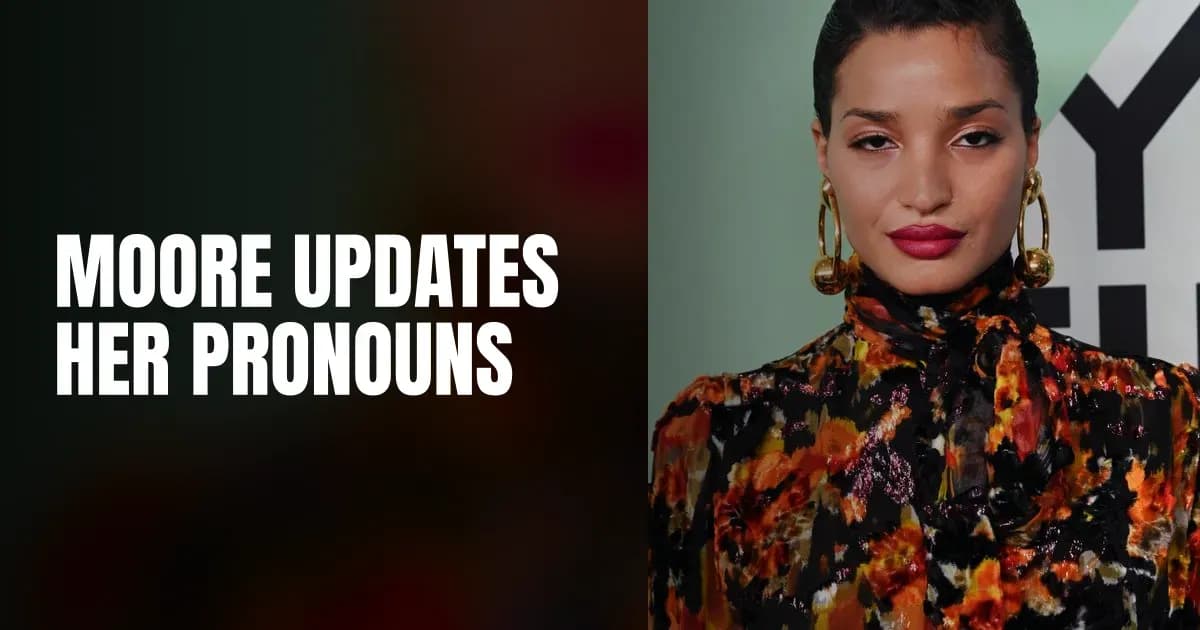
Actress and organizer Indya Moore told fans this week that she no longer identifies as nonbinary, asking to be referred to with she/her pronouns going forward after years of publicly using they/them.
A Quiet Announcement, Loud Reaction
The update came via a blue-and-purple Create-Mode Instagram story late Monday night, a low-key format for a fairly significant personal announcement. "I no longer identify as nonbinary. My pronouns are she/her. Please be kind to me. I may share more later," Moore wrote, signing off with "love, solidarity, peace and gratitude." She did not elaborate on what prompted the change.
I no longer identify as nonbinary. My pronouns are she/her. Please be kind to me.
Indya Moore
Comments filled quickly with encouragement rather than confusion. "Change is neverending, you and only you can make these decisions about your life," one commenter wrote. Others echoed the sentiment that evolving one's gender identity, even publicly and after years of visibility, is simply part of being human.
From They/Them to She/Her: The Backstory
Moore first identified publicly as nonbinary in a 2019 post, describing herself as "non binary, femme," with agender also feeling fitting, and requesting they/them pronouns. That was around the same period she rose to prominence playing Angel Evangelista, the escort-turned-model at the heart of Pose, FX's landmark series about New York's Black and Latino ballroom scene. Later that year, TIME named her one of its 100 most influential people in the world.
Notably, Moore has said her relationship to pronouns was never entirely simple. In past interviews, she acknowledged sometimes allowing people to use "she" out of social comfort, worried she'd be seen as difficult or that people weren't ready to understand an identity outside the binary. That history matters here: this isn't necessarily a reversal so much as Moore now naming, plainly, what pronoun she actually wants used.
MQ's Take
It's worth resisting the urge to treat this as a contradiction or a retreat. Gender identity, for plenty of trans and nonbinary people, isn't a single door you walk through once. Moore's early gender exploration was shaped by a childhood where her femininity was punished, landing her in foster care, and by a trans community that later gave her room to figure herself out on her own terms. That same freedom to explore is what let her land, years later, somewhere different. Respecting that doesn't require an explanation from her, and she's made clear she isn't obligated to give one right away.
Cover photo: PhilipRomanoPhoto, CC BY-SA 4.0, via Wikimedia Commons