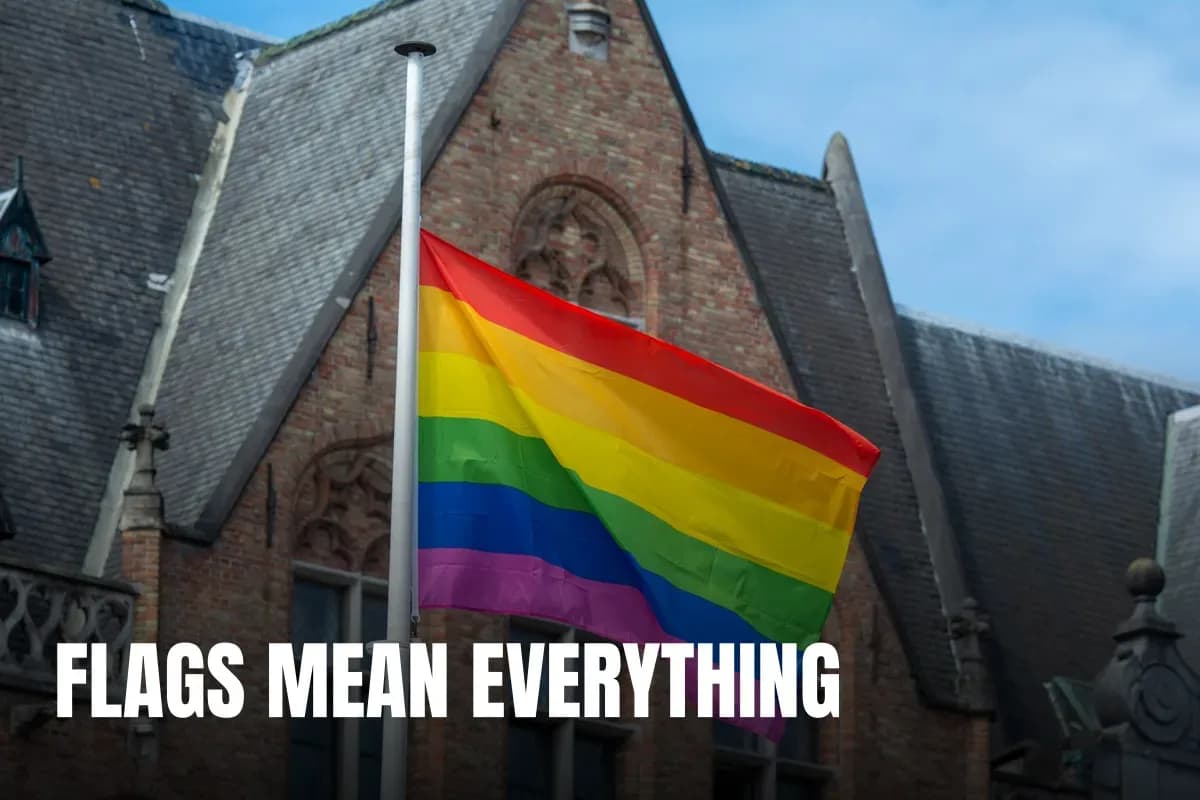
When the federal government removed Pride flags from the Stonewall National Monument earlier this year, the backlash was swift and fierce. Queer activists, media outlets, and allies rallied to oppose the decision, and a group of determined community members even re-raised the flags themselves. The intensity of that response reveals something profound: for LGBTQ+ people, flags are far more than decorative symbols.
Why Flags Matter
For a community that has historically been told to hide, flags offer radical visibility. Much of the oppression facing LGBTQ+ people weaponizes shame and invisibility, banking on the fact that queerness isn't always obvious and that silence keeps us isolated. Flags shatter that dynamic. They announce pride where society demanded secrecy, turning personal identity into a bright, public statement.
Research backs this up. A 2017 study of LGBTQ+ youth found that young people use flags to identify safe spaces and find community support. One teen surveyed described spotting a flag as a sign: if you see it, go ask, because someone there will have your back. Flags work because they're simple enough to recognize from a distance, yet powerful enough to signal belonging to those searching for it.
A Growing Vocabulary of Identity
The diversity of flags has exploded over the past two decades. The classic six-stripe rainbow flag dominated through the 1990s and early 2000s, but the 2010s brought an unprecedented expansion. The bi flag and trans flag gained visibility, Philadelphia added brown and black stripes to acknowledge LGBTQ+ people of color, and designer Daniel Quasar created the Progress Pride flag, which incorporated trans colors and became one of the most recognizable designs at community events today. That was just the beginning. The 2010s saw countless additional flags emerge, particularly for asexual and aromantic identities, reflecting a broader shift toward honoring the full spectrum of human experience.
Community and Individuality in Tension
This explosion of flags reflects two competing needs within LGBTQ+ community. Broadly recognized flags like the rainbow and Progress Pride flags unite us and signal that a space is safe for everyone. But equally important is the chance for individuals to see themselves reflected in a symbol that speaks directly to their experience. That push and pull, between solidarity and self-recognition, explains why the landscape of Pride flags continues to grow. Each new flag says: you belong here, and we see you.
Source: LGBTQ Nation
Cover photo: Jan van der Wolf / Pexels