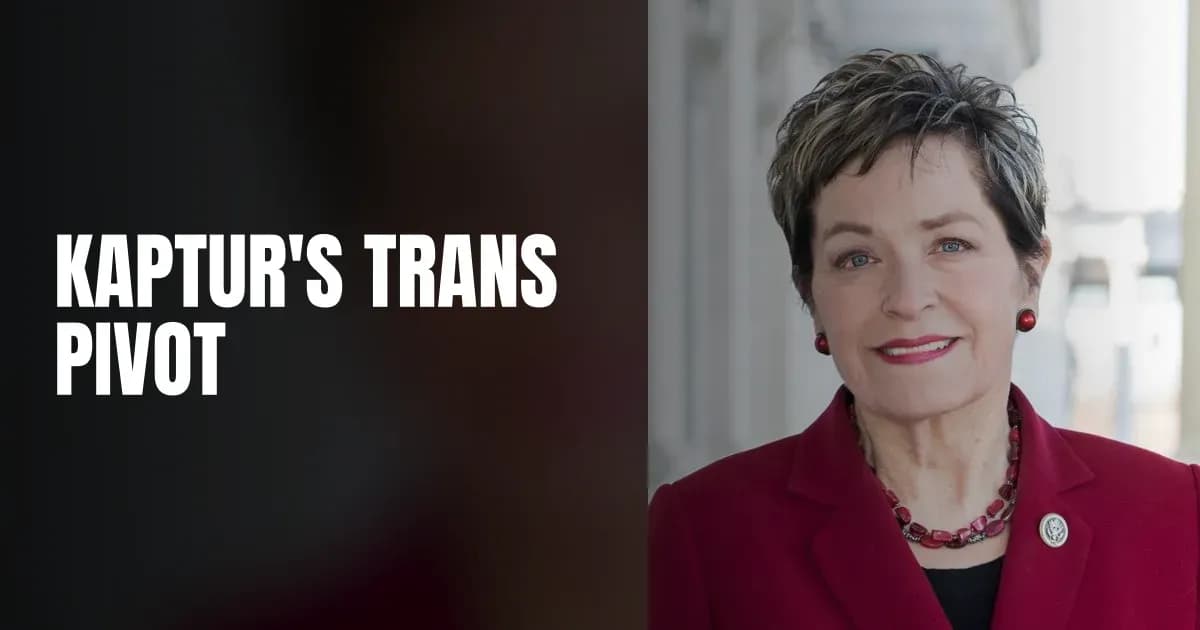
Rep. Marcy Kaptur, a Democrat who has represented Northwest Ohio since 1983, has released two campaign ads touting her vote against transgender students and athletes, a striking pivot for a lawmaker who has spent decades building a pro-equality record.
The first spot, posted to X on September 17 by the Columbus-based firm Medium Buying, has Kaptur pivoting from inflation to her opponent's culture-war framing. "Well, here's the truth: I voted with Republicans to keep transgender ideology out of our schools, because parents know what's best for their kids, and boys should not play in girls' sports," she says, before pledging to keep the focus on affordability. A second, 15-second ad titled "Say No" leans harder into the same message, with Kaptur listing votes against her own party, including "no to teaching gender ideology in schools."
A Reversal Years in the Making
Kaptur's LGBTQ+ record until this year looked nothing like the ads suggest. She has backed the Equality Act, supported marriage equality, and voted against the Protection of Women and Girls in Sports Act in both 2023 and 2025. Equality Ohio still gave her a "B" on its 2026 Candidate Scorecard, largely on the strength of that history.
The grade would have been higher if not for one vote in May, when Kaptur was one of just eight House Democrats to support a Republican bill requiring public elementary and middle schools to get parental permission before using a name or pronoun that doesn't match a student's sex assigned at birth. Advocates say the measure effectively forces school staff to out transgender kids to their families, even in cases where abuse is suspected, and it would strip federal funding from schools that teach that gender identity can differ from sex assigned at birth.
Kaptur has not publicly explained the vote. Advocates who sought a meeting or statement came away empty-handed, a silence that makes the new ads look less like a considered policy shift and more like defensive positioning six weeks before Election Day.
A Tight Race Driving the Strategy
The calculation is not hard to follow. Kaptur beat Merrin by less than a point in their 2024 rematch, and Ohio's 9th District has since been redrawn to lean more Republican as working-class voters around Toledo continue drifting rightward. Her decades of personal incumbency have kept the seat blue, but the margin for error is thin, and her campaign appears to be trying to inoculate her against Merrin's attacks before he can define her first.
Targeting trans people isn't the winning strategy some people think it is. Real leadership means refusing this culture war bait, not reaching for it.
Dwayne Steward, Equality Ohio
She's not alone in that calculation. Ohio's Democratic gubernatorial nominee, Amy Acton, attended Pride events in June before later saying she "doesn't support boys playing in girls' sports," a nearly identical hedge that has left transgender Ohioans and LGBTQ+ organizers wondering whether the party's Ohio ticket has settled on a shared strategy of conceding ground on trans issues to protect its odds statewide.
MQ's Take
There's a version of political triangulation that's defensible: candidates in tough districts don't always vote in lockstep with the loudest voices in their own coalition, and nobody expects every Democrat to be a perfect ally. What's different here is the daylight between Kaptur's record and her messaging. A lawmaker who spent years backing the Equality Act and opposing sports bans is now cutting ads that sound like they came from the Merrin campaign, without ever explaining why she changed course. That's not nuance, it's avoidance, and the people caught in the middle are transgender kids who now have a Democratic incumbent's name attached to a bill that could force schools to out them.
Turning on a vulnerable community is not a winning political strategy, and it's exactly what Trump, Vance, and Musk want. It legitimizes their side and weakens ours.
Ramiro Sarmiento, Human Rights Campaign
The Human Rights Campaign's warning is worth sitting with: LGBTQ+ adults make up roughly 12% of the electorate and lean heavily toward candidates who support trans rights. Ads like Kaptur's aren't likely to flip committed Republican voters who already distrust her party, but they can absolutely dampen turnout and enthusiasm among the voters who've backed her for over 40 years. If Democrats keep concluding that distancing themselves from trans constituents is the safe play, they may find out the hard way that it costs them more than it gains.
Source: Metro Weekly
Cover photo: Official House Photographer, Public domain, via Wikimedia Commons