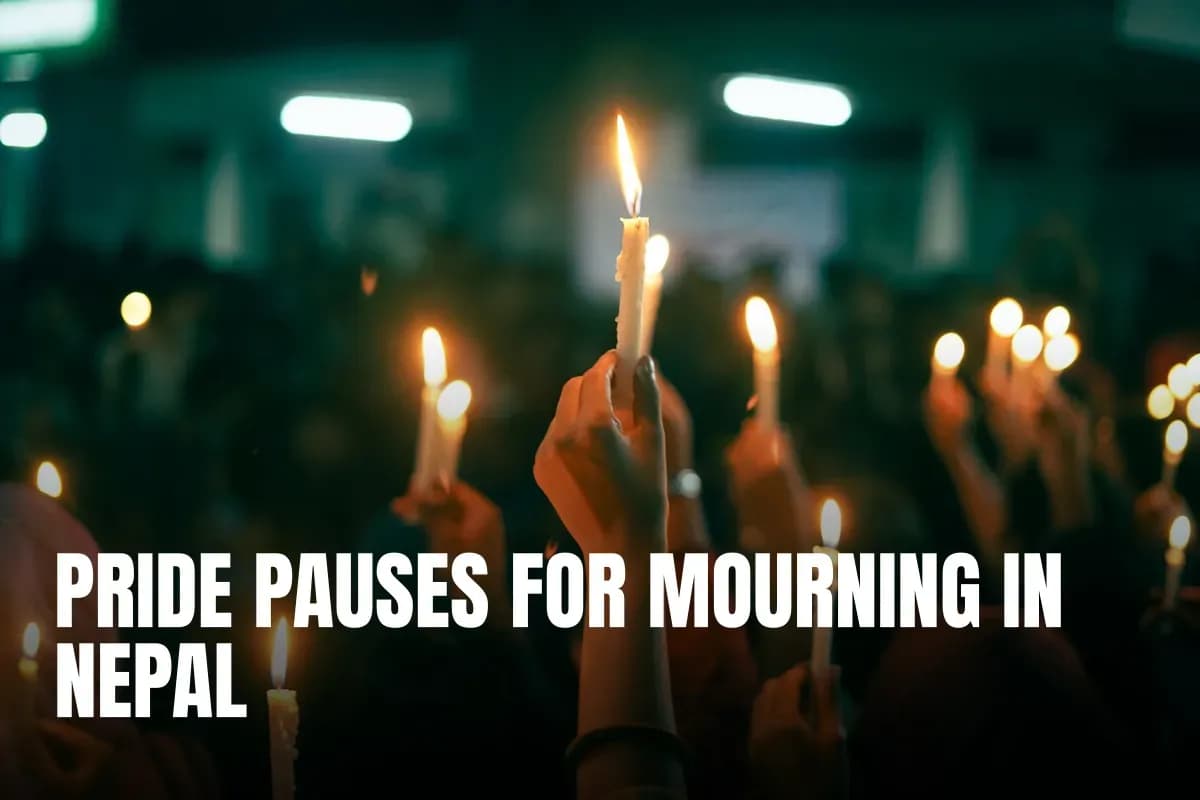
Nepal's LGBTQ+ community swapped rainbow flags for candles this weekend, holding a vigil in Kathmandu for victims of the flash floods that have killed at least 903 people and left thousands missing along the Nepal-China border.
A Pride Parade Becomes a Prayer Vigil
For 24 years, the Blue Diamond Society has marked Gai Jatra, Nepal's traditional festival honoring the dead, with a Pride parade through Kathmandu. This year, with the country reeling from one of its deadliest natural disasters in decades, the organization chose stillness over celebration. On Aug. 29, members gathered instead for a candlelight ceremony, lighting flames for those killed in the floods and for LGBTQ+ community members who died over the past year.
“We organised this small gathering to light candles and pray for the eternal peace of all who lost their lives in this disaster, and to pray that those who are still missing are found as quickly as possible,” one attendee told PTI Videos.
In a statement posted to Instagram, the Blue Diamond Society said it wanted to offer “a quiet space to remember those who have lost their lives and to express our collective grief and solidarity,” framing the shift as a natural extension of its mission rather than a cancellation of it. “Our Pride is also our solidarity,” the group wrote. “We remember. We stand together. We care.” BDS President Umisha Pandey echoed that message, saying, “We stand with our nation in this difficult hour,” while Bhumika Shrestha thanked Nepal's broader gender and sexual minority community for standing with the country during the crisis. The organization also pledged NPR 100,000 to the Prime Minister's Relief Fund.
A Disaster Still Unfolding
The scale of the disaster is staggering. On the morning of Aug. 26, a wall of ice, rock and mud roared through dozens of settlements on the Nepal-Tibet border at speeds near 180 km/h, according to Nepal's disaster authority. Rescue crews are still trying to reach people believed trapped in blocked hydropower tunnels, and the Red Cross estimates more than 90,000 people have been affected overall. On the Chinese side, authorities reported 16 deaths and 546 missing, with Beijing saying 261 foreign nationals from 23 countries remain unaccounted for near the border.
Nepali Prime Minister Balendra Shah called it an “unprecedented and devastating natural disaster,” adding that rescue efforts continue “despite the adverse weather, difficult terrain and continuing risks.”
More Context
This wasn't a freak, isolated event. A 2015 earthquake-triggered glacier collapse in the same border region killed more than 350 people, and a glacial lake outburst flood just last July washed away a bridge along the same frontier. Scientists studying the Hindu Kush Himalaya say roughly 78% of glacier area there is highly exposed to warming, and melting permafrost is weakening the “cryospheric glue” that has held mountainsides together for millennia. Some researchers stop short of directly attributing this specific collapse to climate change, but most agree warming made it more likely, and that disasters like this one will only grow more frequent.
Two Nepali officials also told Reuters that China hadn't shared enough data on glacier risks and water levels, even after a meeting earlier this year meant to strengthen cross-border cooperation. That's notable because a joint early-warning system between the two countries had reportedly prevented casualties for years, only to fail to detect this particular collapse in time.
MQ's Take
There's something quietly powerful about a community choosing grief over celebration without losing its voice. Pride, at its core, has always been about showing up for each other, and the Blue Diamond Society's decision to trade a parade for a prayer vigil doesn't dim that spirit, it sharpens it. In a moment when so many are still missing and a nation is grieving, solidarity looks like candlelight, not confetti.
Cover photo: Nahmad Hassan / Pexels