Three weeks into Big Brother season 28, Salina EsTitties-the drag performer and Drag Race alum competing under her real name, Jason De Puy-found herself once again fighting for survival in the house. But the real moment that defined her week didn't come during a competition or strategy session. It came on the elliptical machine, alone.
The Moment That Broke Through
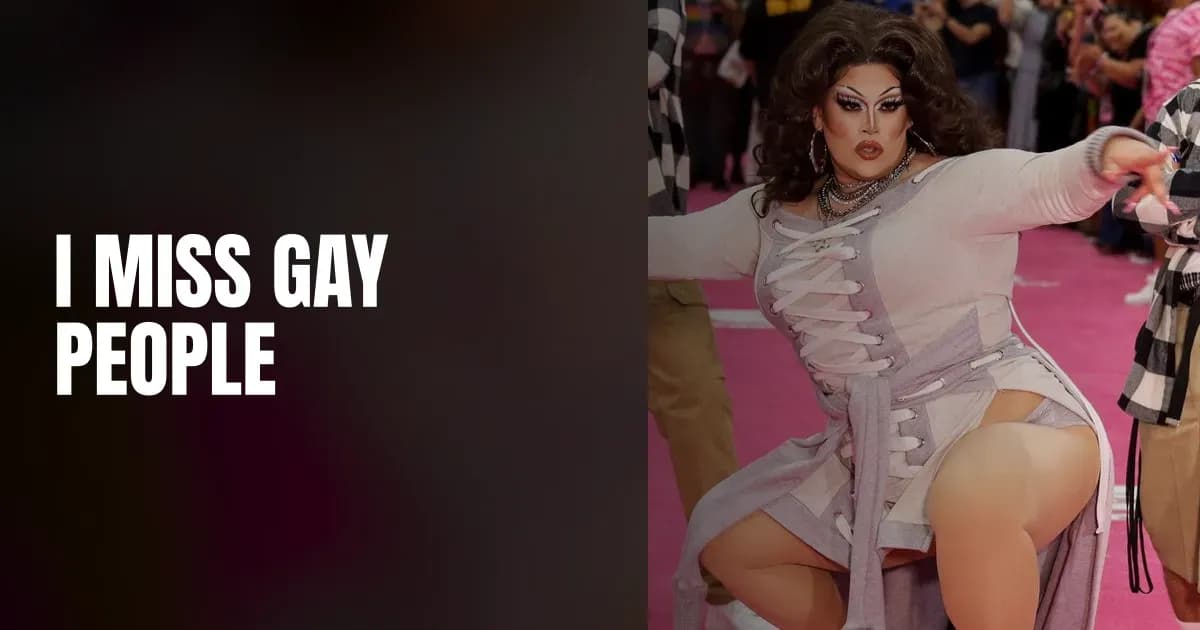
While working out, De Puy was processing her latest nomination-again-courtesy of head of household Kamu Kirk, an MMA fighter who had already clashed with her during the previous week. In a quiet, frustrated monologue, she vented about wanting to send Kirk home, imagining what his fighter friends would think if a drag queen beat him in the game. Then came the line that stopped scrollers in their tracks: "I miss gay people."
It was delivered with theatrical exhaustion, her hand flopping against her forehead as she lay on the couch. The moment was raw enough to sting, ridiculous enough to land as humor, and universal enough that it immediately resonated across social media. By the next day, it had become the summer's gayest meme, with users pairing the clip to every straight, isolating experience imaginable: theatre college, a disappointing karaoke bar, living with conservative parents in your twenties, moving to "bumfuck conservative Arizona."
I miss gay people.
Salina EsTitties, Big Brother 28
The Loneliness Behind the Laugh
De Puy's comment wasn't just spontaneous despair. She's accustomed to working in queer spaces as a drag performer, where she's surrounded by LGBTQ+ community. Inside the Big Brother house, she's the only out queer person among the contestants-a fact that amplified her exhaustion after days of tension with Kirk and earlier conflict with fan-favorite Angela Murray. The isolation is structural, not circumstantial.
That reality prompted immediate pushback from the Big Brother fanbase and LGBTQ+ advocates. Social media users called out CBS and the show's production team for what they saw as performative inclusion: adding a single queer contestant each season, calling it diversity, and then leaving that person to navigate an otherwise straight environment alone.
They pat themselves on the back for putting 1 gay person in the house every year while ignoring how isolating that is.
A Systemic Pattern in Reality TV
The criticism didn't appear in a vacuum. In 2025, GLAAD board members Peppermint and Frankie Grande-himself a Big Brother alumnus from season 16-released an open letter urging reality TV producers and casting directors to stop treating marginalized communities as tokenistic checkboxes. Their message was direct: stop relying on "a single LGBTQ+ cast member or a single storyline to represent an entire community." It's a burden no individual should carry, especially not on live television.
When Salina's gym moment went viral, Grande spotted it and offered solidarity via social media. "We're here baby... just on the other side of the wall," he wrote, acknowledging both the visibility and the loneliness of being a queer voice in a straight-dominated game.
Why It Matters Beyond the Meme
Yes, the clip is funny-relatable, even. But it's funny in the way a lot of truthful things are: the humor sits on top of something that actually hurts. Every LGBTQ+ person has felt the sting of being the only one in the room, whether at work, at family gatherings, or at venues that aren't designed for them. Salina's moment named that feeling so clearly that it became a shared language overnight.
The meme's viral success also brought attention back to the broader issue: reality TV casting teams have long treated queer representation as a box to tick rather than a community to authentically include. One contestant cannot represent an entire spectrum of identity and experience-and shouldn't be expected to. The pressure to perform queerness on a mainstream platform, while isolated from actual queer community, creates a situation that's simultaneously high-stakes and emotionally taxing.
What Comes Next
As of publication, De Puy remained on the chopping block alongside La Trice and Mallory, her game precarious but her resolve visible. The 35-year-old has continued to fight with the chaotic, unfiltered energy that brought her to reality TV in the first place. Whether the meme translates to viewer votes or jury goodwill remains to be seen.
What's clear is that her unguarded moment in the gym did something the show's carefully managed narrative often fails to do: it sparked a genuine conversation about how reality TV treats the communities it claims to represent. Sometimes the most valuable television moment isn't a competition win or a dramatic blindside. Sometimes it's just someone saying out loud what too many people feel alone.
Source: Queerty