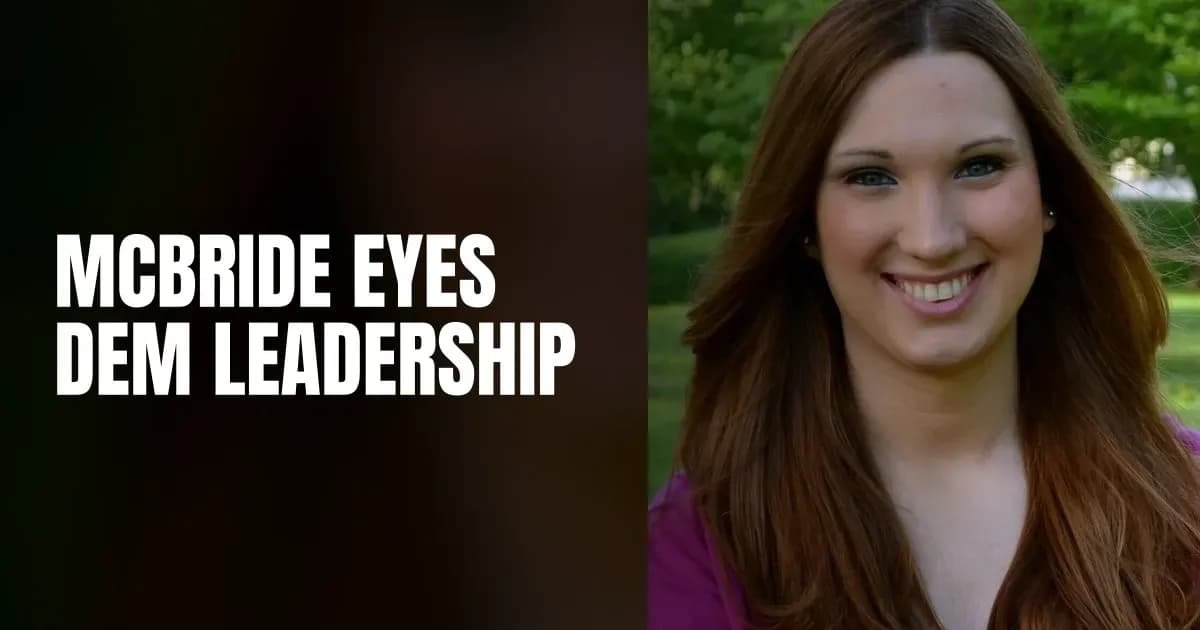
Rep. Sarah McBride (D-Del.), the first out transgender person elected to Congress, has asked her House Democratic colleagues to make her co-chair of the caucus's messaging arm, the Democratic Policy and Communications Committee. She laid out her case in a letter sent to fellow Democrats on September 14, just days before she secured her party's nomination for a second term unopposed.
A Bid Built on Bridge-Building
McBride framed her candidacy less as an ideological pitch and more as an argument about temperament. In the letter, first shared publicly by Axios congressional reporter Andrew Solender, she pointed to her time as the Human Rights Campaign's national press secretary and spokesperson, a job she held from 2016 to 2020 before winning a seat in the Delaware State Senate.
We didn't shame those who disagreed with us. We welcomed them into a conversation about where we agreed and found common ground to build upon.
Sarah McBride
She argued she has carried that same approach into her first term in the House, describing conversations with colleagues split by ideology, geography or the particular politics of their districts. "I never asked a colleague to use a message that didn't fit their district, while also standing firm in our shared principles and what we were trying to accomplish together," she wrote, adding that a "big-tent party" can hold competing instincts together only if members are willing to talk honestly first.
What the Job Actually Involves
The Democratic Policy and Communications Committee is the body responsible for shaping how House Democrats talk about their priorities, both to the press and to voters back home. McBride wants the caucus to "hit the ground running with a unified message" heading into 2027, while acknowledging what she called an "increasingly complex media environment."
Her proposals are practical rather than sweeping: training legislative staff to identify outlets that reach specific audiences, preparing members for long-form interviews with podcasters and streamers who now function as primary news sources for many Americans, and inviting national journalists and media influencers to shadow members at home-district events for a day. The goal, as she describes it, is tailored messaging, letting individual Democrats speak to their own districts while staying anchored to shared party priorities.
Since before I was sworn in, I have been grounded by and grateful for the genuine support members of this caucus show for one another.
Sarah McBride
Timing and the Road to November
McBride's bid lands at a strategic moment. She was unopposed in her party's primary, which was ultimately canceled, and now heads into a general election against Republican Joseph Arminio, whose responses to a 2026 voter guide questionnaire reflect a series of anti-LGBTQ+ policy positions. Seeking a leadership post before that race is decided is itself a bet: it stakes a claim to seniority within the caucus regardless of how the broader House majority fight shakes out, and it signals confidence that her Delaware seat is secure enough to spend political capital elsewhere.
It's also notable how early this comes in her tenure. McBride is barely 18 months into her first term and already a member of the Congressional Progressive Caucus. Her office has touted a Democracy Award for the best constituent services of any House Democrat, freshman or otherwise, evidence she's using to argue she can scale that same responsiveness to the whole caucus's communications strategy.
Why It Matters
McBride has spent her time in Washington deliberately avoiding the role of single-issue lawmaker, even as her presence in Congress is itself historic. That's a real tension: she represents a community under sustained political attack while asking to be trusted with a job that, by definition, requires managing messages for members who don't always agree on how loudly to defend that same community. Her pitch is essentially that those two things aren't in conflict, that a party which can talk honestly across its differences is also better positioned to defend its most vulnerable members when it counts.
Whether her colleagues buy that argument remains to be seen. The letter doesn't name any rival candidates for the co-chair post, and Metro Weekly's reporting doesn't specify when caucus leadership elections will actually happen. But the bid itself is a marker: a first-term member betting that a reputation for coalition-building, honed at HRC and tested in a purple-tinted delegation, is worth more to House Democrats right now than caution.
Source: Metro Weekly
Cover photo: Sarah McBride, CC BY 4.0, via Wikimedia Commons