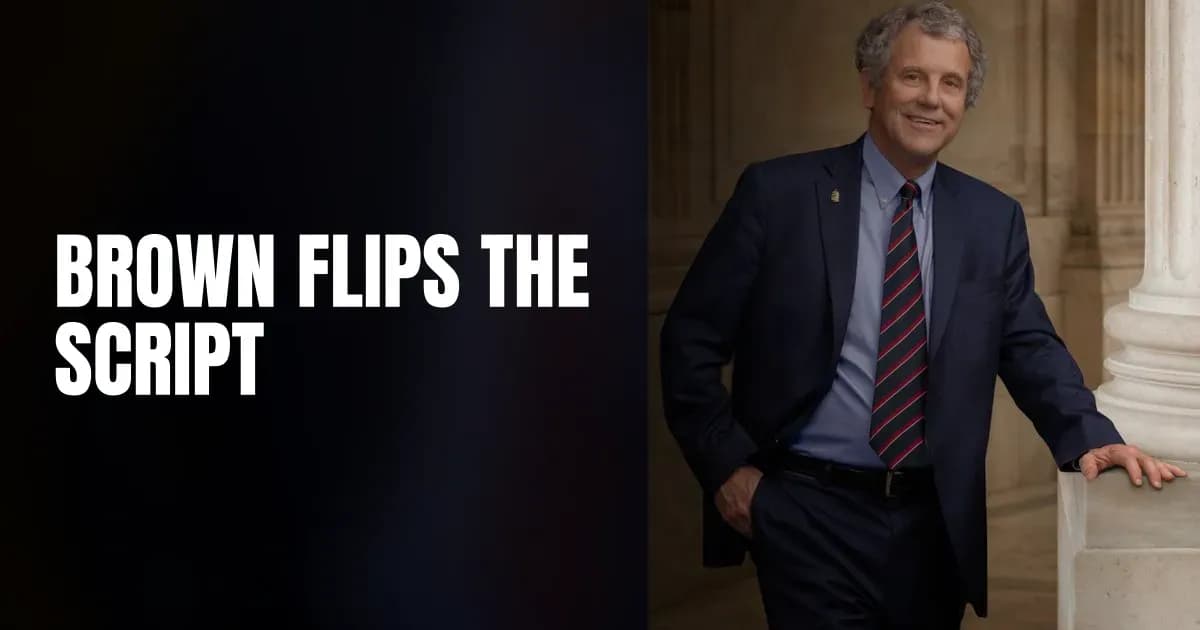
Former Sen. Sherrod Brown is taking a new approach to the anti-transgender attack ads that have dogged Democrats since 2024: instead of pushing back defensively, his latest commercial in Ohio's Senate race mocks Republicans for being obsessed with the issue in the first place.
An Ad That Changes the Subject
The 30-second spot opens with a string of everyday Ohioans, from Johnstown, Granville, and Richwood, essentially rolling their eyes at Republican attacks. "Here they go again, those same attacks against Sherrod Brown," one voter named Warren says, before another, Mary, adds: "With everything going on, that's what they're talking about?"
A third voter, Mike, briefly addresses the substance directly, noting that gender-affirming surgeries for minors are already illegal in Ohio, before the ad pivots hard into an indictment of Husted: that he voted to strip health coverage from hundreds of thousands of Ohioans, backed a law letting utilities raise electric bills, and has stayed silent on rising grocery and gas prices tied to the Trump administration's tariffs.
Jon Husted, why don't you start working for us?
Beth, Ohio voter in Brown campaign ad
It's a deliberate reframing. Rather than litigating trans rights on Republican terms, Brown is betting that Ohio voters care far more about affordability than culture-war fights, a bet that lines up with the numbers: inflation and cost-of-living concerns dominate voter priorities in the state, well ahead of health care or immigration.
A Special Election With Unusual Stakes
This isn't a typical six-year Senate contest. Husted was appointed to the seat after Vice President JD Vance vacated it, and Brown is running in a special election to serve out the remainder of that term, meaning whoever wins will be back on the ballot again in just two years. Polling has swung wildly depending on the pollster, with some surveys giving Brown a comfortable lead and others putting Husted narrowly ahead, but most averages show a race decided by a point or two. Brown appears to be running strongest among women and independents, two groups less receptive to Republicans' trans-focused messaging.
Learning From 2024
Brown lost his Senate seat in the 2024 Republican wave even as he outran Kamala Harris by nearly eight points in Ohio, and his campaign that year took a very different tack on trans issues. That ad tried to "fact-check" claims from then-opponent Bernie Moreno, framing Brown's position as aligned with Republican Gov. Mike DeWine's, and leaned on a local news anchor's on-air verification that Brown hadn't voted to let "transgender biological men" compete in women's sports.
Trans advocates weren't pleased. Journalist Erin Reed argued at the time that the ad's language reinforced the idea that trans women aren't who they say they are, and warned that Brown's defensive posture could push other Democrats to cede the entire issue to the right rather than confront it.
MQ's Take
There's something almost refreshing about a Democrat refusing to play defense on trans issues at all, choosing instead to point out that Republicans keep bringing it up while people's grocery bills climb. It's not a perfect answer for trans Ohioans still navigating a state that's banned their access to care, but as a political strategy, it beats 2024's approach of accepting the GOP's premise and hoping a fact-check softens it.
That spending bought Republicans plenty of airtime, including the infamous "Kamala is for they/them" ad, but it's not clear it bought them much else. The Human Rights Campaign has pointed out that only about 4% of 2024 voters ranked trans issues among their top concerns, and a Data for Progress analysis found most voters actually want both parties to talk about the subject less, believe there's too much anti-trans legislation on the books, and trust Democrats more than Republicans to handle it.
Why It Matters
If Brown's gambit works, it could offer other Democrats a template beyond either capitulating to anti-trans framing or avoiding the subject entirely: name the deflection for what it is and redirect voters to the issues actually shaping their daily lives. Whether Ohio voters reward that approach in a race this close will be one of the more closely watched tests of the midterm cycle.
Source: Metro Weekly
Cover photo: U.S. Senate Photographic Services; Rebecca Hammel, Public domain, via Wikimedia Commons