Turkish police carried out simultaneous raids on LGBTQ organizations, bars, nightclubs, and a public bathhouse across five cities early Sunday, arresting at least 116 people in what rights groups are calling the widest crackdown on the community in recent memory.
What Happened
Officers moved on LGBTQ association offices, bars, nightclubs, and other community spaces in a coordinated pre-dawn operation, according to Turkish officials and multiple outlets. Authorities say they seized drugs, digital equipment, smuggled alcohol, and a firearm, and separately raided a hammam they claimed was being used for prostitution. Justice Minister Akın Gürlek said the investigations span 15 provinces and target nine associations and 13 businesses, with allegations ranging from facilitating prostitution to producing obscene content and "promoting LGBTQ activities" in ways accessible to children.
Amnesty International puts the number under investigation at 162, with 116 people actually arrested and detained. Digital repression preceded the physical raids: authorities blocked access to roughly 180 social media accounts belonging to LGBTQ organizations, activists, journalists, and media outlets a day before police showed up in person, a sequence that suggests the operation was planned well in advance rather than a spontaneous response to any single incident.
Targeted groups included Kaos GL, one of Turkey's oldest LGBTQ advocacy organizations, along with LİSTAG, SPoD, Lambdaistanbul, HEVİ LGBTİ+, Pozitif Yaşam, and Pozitif İz. A separate Ankara prosecution accuses Kaos GL's website and social accounts of hosting "obscene material" accessible to minors. At least one journalist, Tuğba Tekerek, was detained at her Istanbul home and taken to Ankara for questioning after publishing a piece with Kaos GL on the LGBTQ community in neighboring Georgia.
Protests Met With Tear Gas
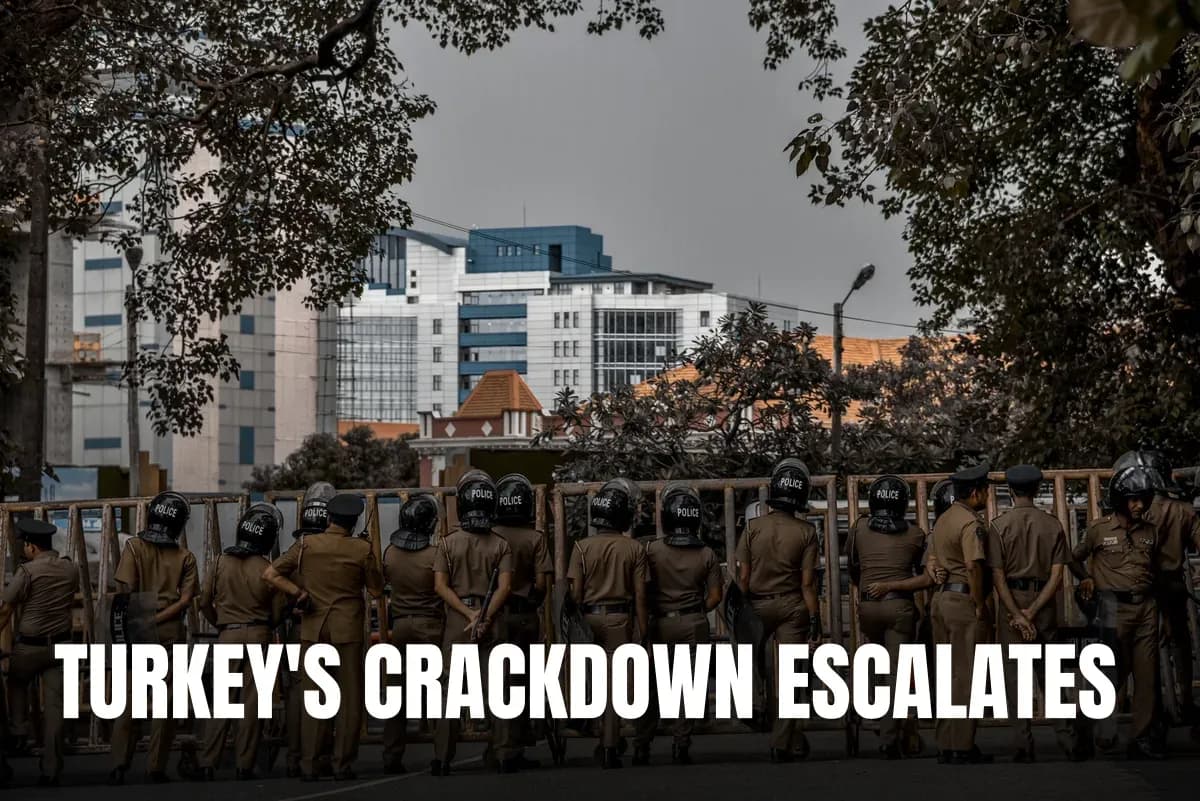
The raids sparked protests that authorities met with force. Police tear-gassed hundreds of demonstrators in İzmir and detained more than 150 people in Istanbul, with dozens more arrested in Ankara. Outside a courthouse in Istanbul, demonstrators unfurled a banner reading "Being LGBTQ+ is not a crime" and chanted for the freedom to organize.
Being LGBT, forming an association and defending our rights are not crimes.
Human rights monitors have been blunt about what they believe is really going on. Emma Sinclair-Webb of Human Rights Watch called it "the widest crackdown on LGBTQ+ people in recent years" and accused authorities of using unrelated charges, drugs, prostitution, obscenity, to smear an entire community rather than pursue individual wrongdoing. Turkey's Human Rights Association went further, describing the campaign as "a political operation aimed at forcing society into a monolithic family model and purging LGBTI+ and independent civil society under the guise of protecting the family and children."
The Family Values Framing
Officials have tied the raids directly to President Recep Tayyip Erdoğan's "Decade of Family and Population," a ten-year executive initiative running through 2035 meant to reverse a national fertility rate that has fallen to about 1.48 children per woman. Gürlek framed the operation as protecting "the institution of the family, and public order," and flagged that some targeted associations had received foreign funding, which regulators are now scrutinizing for possible ties to the alleged activity.
Erdoğan has repeatedly blamed LGBTQ "perverts" for the falling birth rate. Demographers and economists point instead to inflation, a worsening cost-of-living crisis, soaring housing prices, thin access to affordable childcare, and rising education and employment among women as far more plausible drivers.
More Context
This is not a new posture from Ankara so much as an escalation of one. Istanbul Pride has been banned and forcibly dispersed every year since 2015. A draft penal code amendment that would have criminalized "promoting" behavior deemed contrary to biological sex was floated and then withdrawn last year, only for authorities to fall back on broader obscenity statutes to the same effect. Eleven leaders of the youth group Genç LGBTI+ went on trial last month on similar grounds, facing up to three years in prison for publishing images of same-sex couples kissing. Earlier this summer, Turkey barred an LGBTQ cruise ship from docking, describing its passengers as incompatible with the country's moral values.
Analysts see a deliberate strategy behind the pattern, not just reactive policing. Middle East Institute researcher Gonul Tol has argued that Erdoğan's "family values" agenda functions as a way to define who belongs in Turkish society, framing LGBTQ people simultaneously as a threat to the traditional family, a foreign import, and a symbol of everything his movement opposes.
Why It Matters
Turkey remains a candidate for European Union membership, and EU officials have said Ankara is expected to "promote and ensure respect for the human rights and dignity of all individuals, irrespective of their gender identity or sexual orientation." A crackdown of this scale, hundreds of accounts silenced, over a hundred people detained, associations financially investigated, tests how seriously that expectation is enforced. It also lands on a community that has organized openly in Turkey for decades, through groups founded well before the current government, now facing the prospect that simply existing publicly is being treated as criminal conduct.
What happens next likely hinges on whether the prosecutions produce anything resembling the abuse or exploitation cases officials claim to be pursuing, or whether, as rights groups predict, the charges quietly fold once the political message has landed.
Sources: Metro Weekly, The Guardian, The Advocate
Cover photo: sk / Pexels