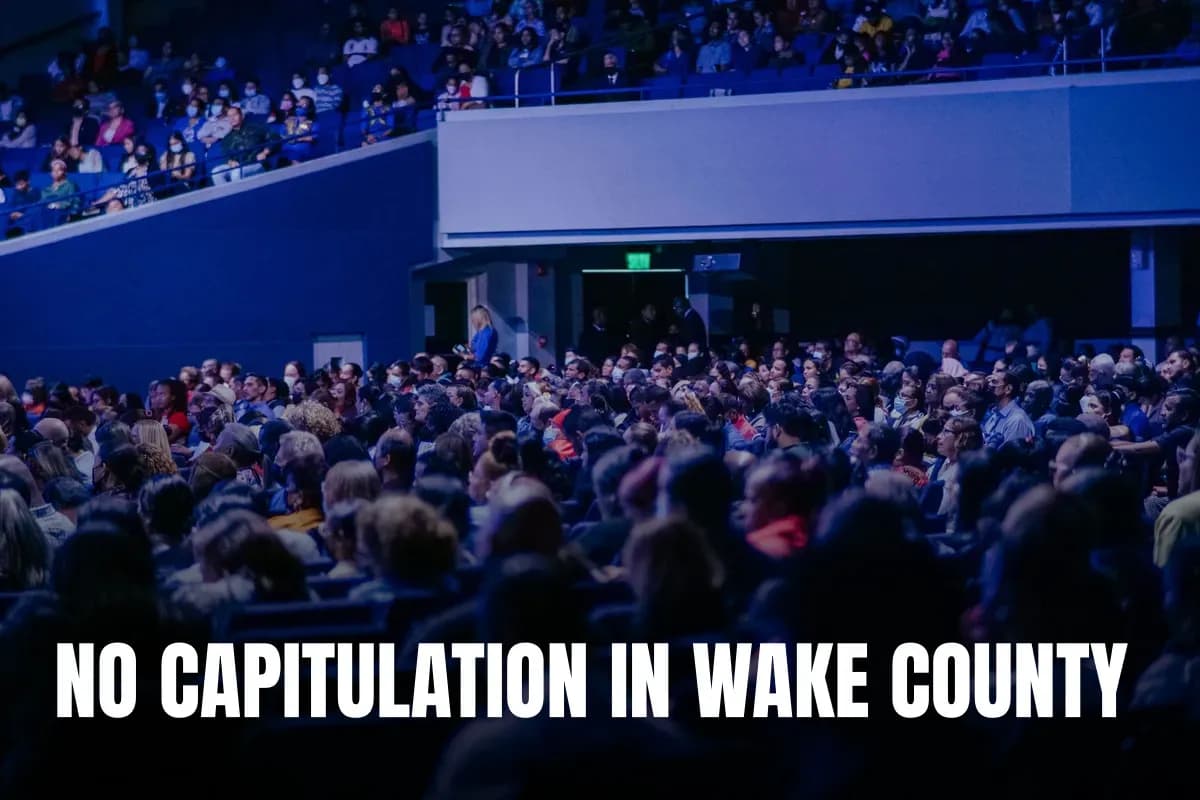
A Wake County school board meeting meant to cover budget cuts and teacher pay turned into a five-hour referendum on one transgender music teacher's right to keep her job, after a state lawmaker and a national anti-trans account turned her into a target.
How a Facebook Post Became a Movement
The uproar traces back to the night of July 30, when Libs of TikTok posted about the teacher's hiring at Middle Creek Elementary School, misgendering her and framing her presence as an alarming novelty. The post reportedly drew nearly 300,000 views within a day. Roughly a week later, state Rep. Erin Paré posted on Facebook that she'd "brought your concerns" about the "transgender biological male" teacher to district leadership, and floated introducing a bill requiring "gender-appropriate professional attire for public school employees."
That combination, a viral post plus a sitting legislator's endorsement, turned a local hire into a statewide flashpoint. Moms for Liberty and local activist Aaron Driver's group, Middle Creek Parental Rights, mobilized supporters for a series of board meetings, culminating in Tuesday's session.
Inside the Meeting
Public comment ran for hours, with anti-trans speakers demanding the teacher be removed, that parents be allowed to pull kids from her class, and warning of lawsuits over her employment. Driver told the board he claims a religious exemption from "gender theory" and framed his objections as parental protection rather than hostility. Moms for Liberty's Wake County chair, Becky Lew-Hobbs, argued the teacher's presence violated the state's law restricting instruction on gender identity in early grades, a law that legal advocates note does not bar transgender staff from being employed or answering students' unprompted questions.
Tonight I'm speaking in support of an educator, a young teacher who was in her first job out of college, teaching music to elementary school children. She chose to serve children.
Kelli Wilhelm, Raleigh-Apex NAACP
Supporters pushed back just as forcefully. One community member asked pointedly where the "parental rights" crowd had been when the district faced an $18 million budget shortfall. Board member Lynn Edmonds said she trusted the principal's hiring process and hoped families would treat the moment as a chance to learn about diversity rather than a crisis. The meeting ended with no vote, no policy change, and no action taken against the teacher.
A Bill With No Legal Footing
Paré's proposed dress code would almost certainly not survive a court challenge; the ACLU of North Carolina and LGBTQ+ advocacy groups have already called it unconstitutional. That hasn't stopped similar tactics from working elsewhere. Florida's 2023 law barring school employees from using titles or pronouns inconsistent with their sex assigned at birth forced a transgender teacher there to go by "Mr." or simply "Teacher," and gay teachers in other states have faced discipline for mentioning spouses or keeping family photos on their desks. A dress code targeting clothing would be a new, more granular version of the same playbook.
Why This Is Landing in North Carolina
North Carolina isn't a deep-red state built for this kind of campaign to sail through unopposed. It has a Democratic governor, and the district's fight is unfolding against a competitive U.S. Senate race between Democrat Roy Cooper and Republican Michael Whatley, who has already weighed in online, warning against letting "men in high heels and skirts" work in schools. That national money and attention are being funneled into a single elementary school's staffing decision says less about the teacher than about how useful trans educators have become as a wedge issue heading into 2026's midterms.
Our Read
What's striking here isn't just the cruelty of turning a first-year music teacher into a statewide controversy, it's how thin the actual complaint is. No student was harmed. No policy was broken. The objection, stripped down, is simply that she exists and works with children. Wake County's decision to hold the line, without capitulating to threats of lawsuits or demands for special opt-outs, matters precisely because so many districts elsewhere have folded under identical pressure. It also matters that the loudest local voices lining up against her weren't fighting nearly as hard when the district faced real cuts to actual classroom funding.
What to Watch
Federal civil rights investigations into other North Carolina districts over trans-inclusive policies suggest Wake County could face similar scrutiny if this story keeps climbing. Whether Paré actually files her dress code bill, and whether it gets traction in a legislature that has already passed restrictions on gender-identity instruction, will be the next test of how far this fight goes beyond one school board meeting.
Source: Erin in the Morning
Cover photo: Luis Quintero / Pexels