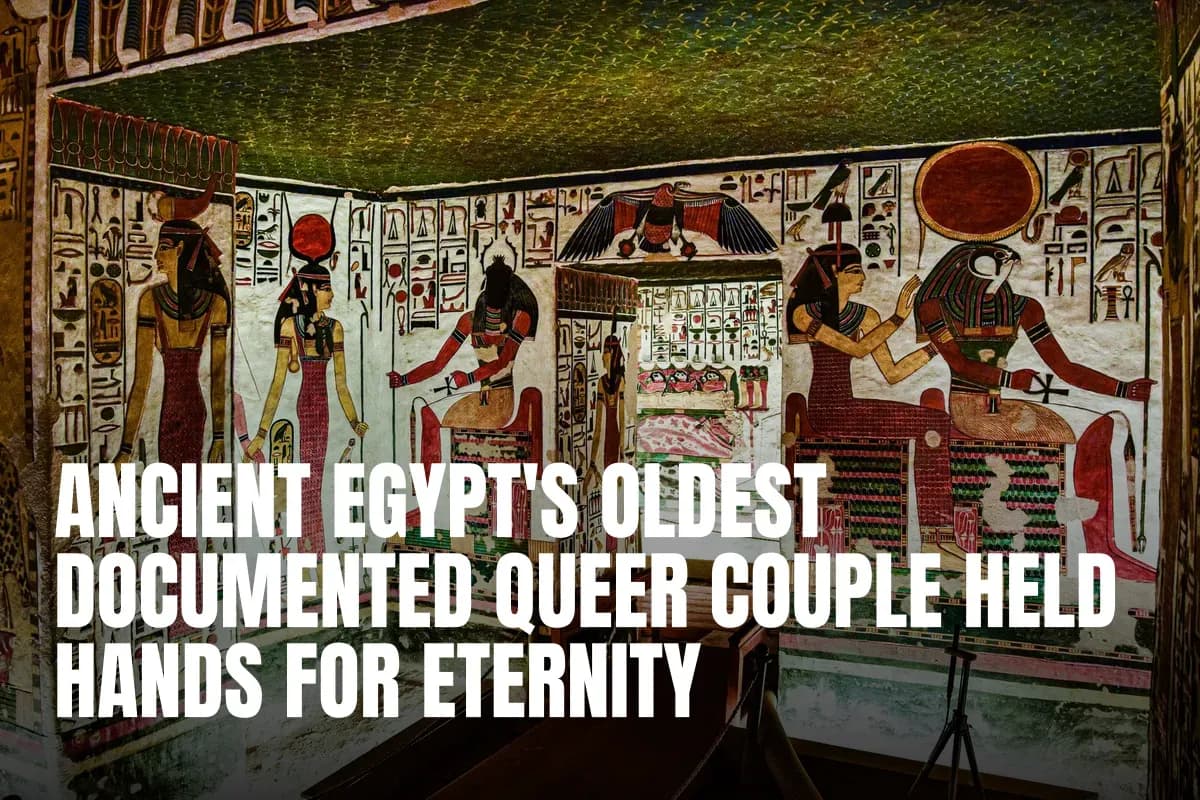
A discovery at an Egyptian archaeological site is rewriting assumptions about queer love in the ancient world. Two royal manicurists named Khnumhotep and Niankhkhnum, who served the Pharaoh during Egypt's Fifth Dynasty around 2,400 BC, may be the oldest documented same-sex couple in recorded history. Their shared tomb, uncovered at Saqqara in 1964, depicts them in a face-to-face embrace with an intimacy typically reserved only for husbands and wives in Egyptian art.
A tomb built for two
The artwork in their tomb shows both men facing each other, their lips nearly touching, and depicted sharing breath, a gesture of profound romantic intimacy in ancient Egypt. What makes the discovery even more striking is that both men had wives in life, yet neither woman appears prominently in their burial chamber. Instead, Niankhkhnum's wife has been deliberately erased from key afterlife scenes, leaving space for his companion. This wasn't casual tomb decoration: in Egyptian belief, tomb artwork was meant to literally manifest in the afterlife, making these artistic choices a permanent statement of their bond.
Status and scholarship
As royal manicurists, Khnumhotep and Niankhkhnum held rare and treasured positions. They were among the few servants permitted to place hands directly on the Pharaoh, a privilege that placed them among Egypt's most valued workers. This elite status likely gave them the authority to depict their love in ways unavailable to most people. Some scholars have argued they were brothers, but the near-kiss pose and the intentional erasure of their wives make that theory less convincing. Few, if any, brothers in Egyptian art were shown with their noses touching.
What it means
The discovery raises profound questions about how ancient Egypt viewed same-sex relationships. At minimum, the tomb suggests that for high-status couples like Khnumhotep and Niankhkhnum, loving unions between men were not only permitted but celebrated. At least one other documented example exists: two women named Idet and Ruiu depicted in a similar lover's pose. The scarcity of surviving references to same-sex relationships in ancient texts may reflect what those writings actually recorded rather than what society accepted. What's clear is that four thousand years before modern Pride, at least some ancient Egyptians ensured their queer love would be etched in stone for eternity.
Source: Queerty
Cover photo: AXP Photography / Pexels