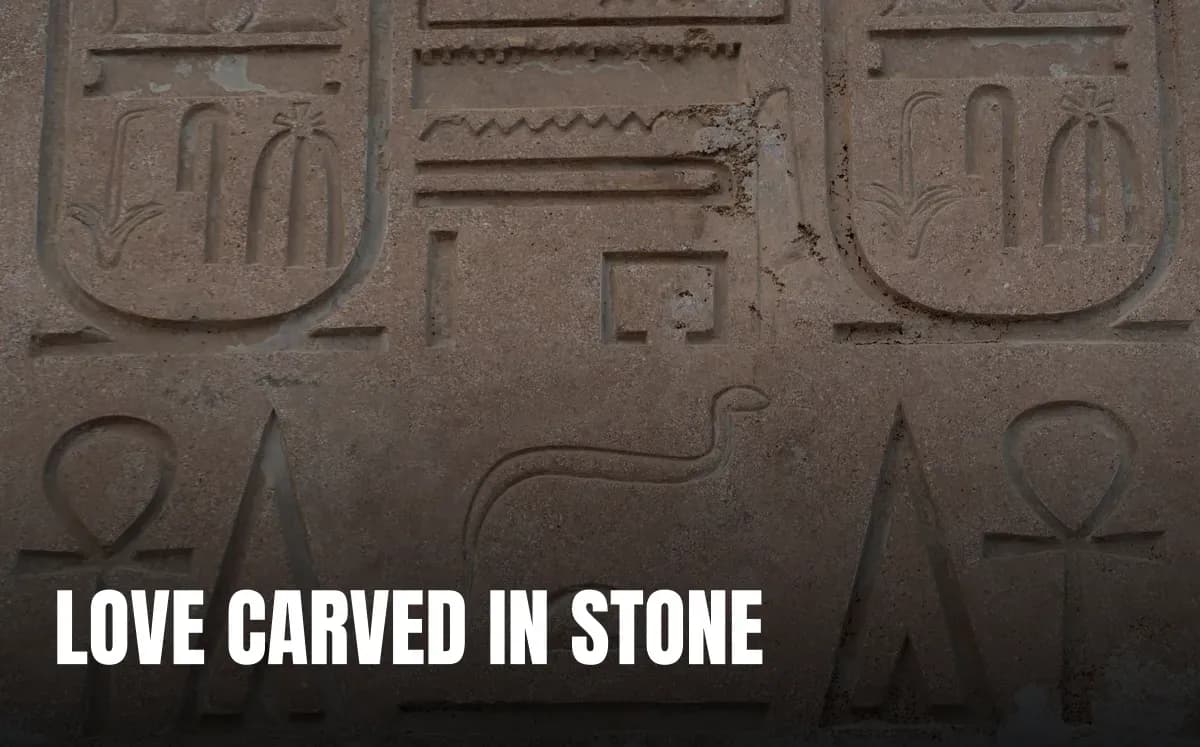
In 1964, archaeologists uncovered a discovery in Egypt that would challenge assumptions about LGBTQ history. At the Saqqara dig site, researchers found a joint tomb from ancient Egypt's Fifth Dynasty containing evidence of what appears to be one of history's oldest same-sex unions. The tomb's walls depict two royal manicurists, Khnumhotep and Niankhkhnum, in an unmistakably intimate embrace, their faces nearly touching in a gesture typically reserved for married couples in Egyptian art.
A Love Carved in Stone
The artistry on the tomb walls leaves little ambiguity about the relationship between these two men. Khnumhotep and Niankhkhnum are shown facing each other with their lips almost touching, holding hands, and sharing breath in poses that mirror spousal depictions from the era. What makes this even more striking: the walls originally included both men's wives, but Niankhkhnum's wife was deliberately erased, ensuring that his eternal companion would be Khnumhotep alone. This wasn't casual interior decoration. Egyptian tomb art was believed to manifest literally in the afterlife, making these choices deliberate and lasting.
Status and Acceptance
As royal manicurists, Khnumhotep and Niankhkhnum occupied positions of considerable power and trust. Only the most treasured servants were permitted to handle the Pharaoh's hands, a rare privilege that granted them unusual artistic freedoms. According to Dr. Harini Bhat, these were not minor court officials but men revered enough to defy artistic convention. The depiction of two men in such an intimate pose was extraordinary; no parallel exists elsewhere in tomb art from the period, though at least one other same-sex couple, the women Idet and Ruiu, appear in a similar lover's pose on surviving artifacts.
What It Reveals
The discovery raises compelling questions about how ancient Egypt viewed same-sex relationships. Some scholars have attempted to reframe Khnumhotep and Niankhkhnum as brothers, but the erasure of a wife and the explicit romantic imagery undermine that interpretation. The rarity of such depictions in the archaeological record suggests these relationships, while perhaps not formally codified, were accepted enough among the elite to commemorate in stone. Ancient Egyptian writings rarely address sexuality directly, making definitive conclusions difficult. Still, the existence of multiple documented same-sex couples across centuries implies a cultural comfort strikingly different from later periods of history.
Source: Queerty
Cover photo: Александр Лич / Pexels