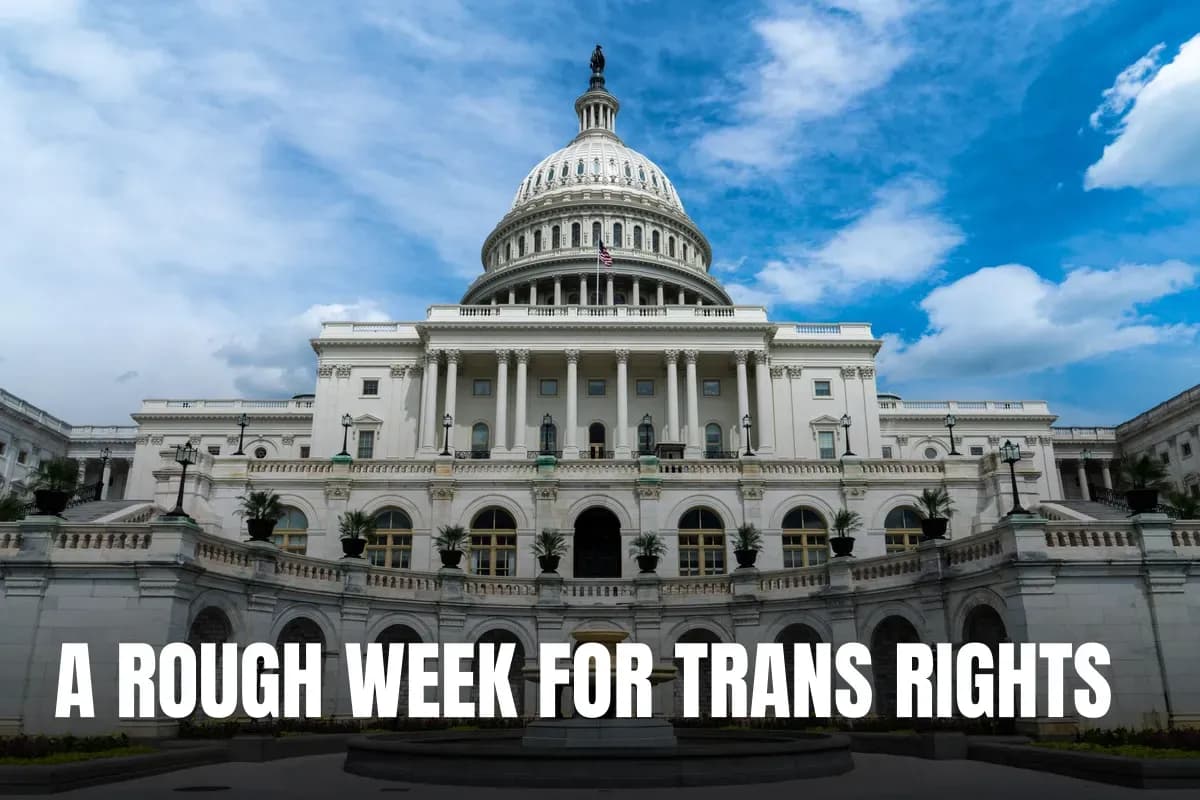
Four separate storylines collided this week to paint a stark picture of where LGBTQ+ rights currently stand in American politics: a Republican congressman appeared to threaten to out a sitting senator, Michigan became the first state to lose its conversion therapy ban, a Democrat apologized for once suggesting his party abandon trans athletes, and the federal government quietly stopped tracking anti-trans bullying in schools.
A GOP lawmaker's outing threat
Rep. Max Miller (R-OH) appeared to threaten Sen. Bernie Moreno (R-OH), his father-in-law, with exposure this week, after Moreno publicly called on Miller to resign over abuse allegations. Moreno, who is married to a woman and not out, was linked to a gay dating app account several years ago. Speaking with CNN's Jake Tapper, Miller suggested he could go public with something deeply personal about the senator.
I could expose a deeply and personal embarrassing matter to the senator.
Rep. Max Miller
Whatever the family dispute underneath it, the exchange landed as a reminder of how outing still functions as a political weapon inside a party that has spent years campaigning against LGBTQ+ visibility. Threatening exposure as punishment, rather than treating someone's private life as their own business, only works because homophobia still carries real currency in Republican politics.
Michigan's conversion therapy ban falls
Michigan has become the first state to lose its ban on licensed therapists practicing conversion therapy on minors, after a federal court struck it down in the wake of a Supreme Court decision earlier this year finding that such bans may violate therapists' free speech rights. Michigan was one of 27 states that had barred the discredited practice for minors.
The Supreme Court's earlier move to let the Trump administration enforce its transgender military ban while litigation continues, over the objection of three liberal justices, signaled a Court willing to side with the administration on LGBTQ+ questions. Michigan's loss looks less like an isolated legal fluke than the first domino. Advocates are already discussing workarounds, including consumer-fraud and false-advertising statutes, since conversion therapy has never been shown to work and routinely causes lasting harm.
Moulton's apology
Rep. Seth Moulton (D-MA), who drew sharp criticism after the 2024 election for suggesting Democrats reconsider their support for transgender athletes, has apologized.
To the trans community feeling the weight and the pain of the Trump administration policies, I deeply recognize your trauma, and I'm sorry if my comments hurt you.
Rep. Seth Moulton
Most congressional Democrats held the line against GOP efforts to ban trans students from school sports; Moulton was one of the most visible exceptions. His reversal comes amid a primary challenge, which is worth naming plainly.
Worth Considering
An apology delivered under primary pressure isn't the same as a principled reckoning, but it still matters. Politicians respond to incentives, and if standing with trans people becomes the safer bet even for someone who once hedged, that's a shift worth tracking rather than dismissing outright. The test is what Moulton does next, not just what he now says.
Erasing the paper trail on bullying
The Department of Education says it will stop collecting data on bullying, harassment, and assault targeting trans and nonbinary students, citing compliance with the decades-old Paperwork Reduction Act and arguing that the data collection's costs outweigh its benefits. Somehow, of all the data the federal government tracks, it's specifically the safety of trans kids that no longer clears that bar. Losing this data doesn't make the bullying stop; it just makes it harder to prove it's happening.
Also this week
Separately, reporting continues on secret, seemingly predetermined discharge boards used to push transgender troops out of the military under Trump's ban. One Army Reserve defense lawyer described going in hoping the process wasn't rigged and finding it was worse than feared. The litigation remains fractured: a federal court certified class-action status for one challenge in June, a DC Circuit panel has blocked removals of currently enlisted trans troops while allowing the ban to stand for new recruits, and the Supreme Court let the ban take effect while the underlying case proceeds. Current servicemembers have some protection for now; future recruits have none.
Source: LGBTQ Nation
Cover photo: Michael Judkins / Pexels