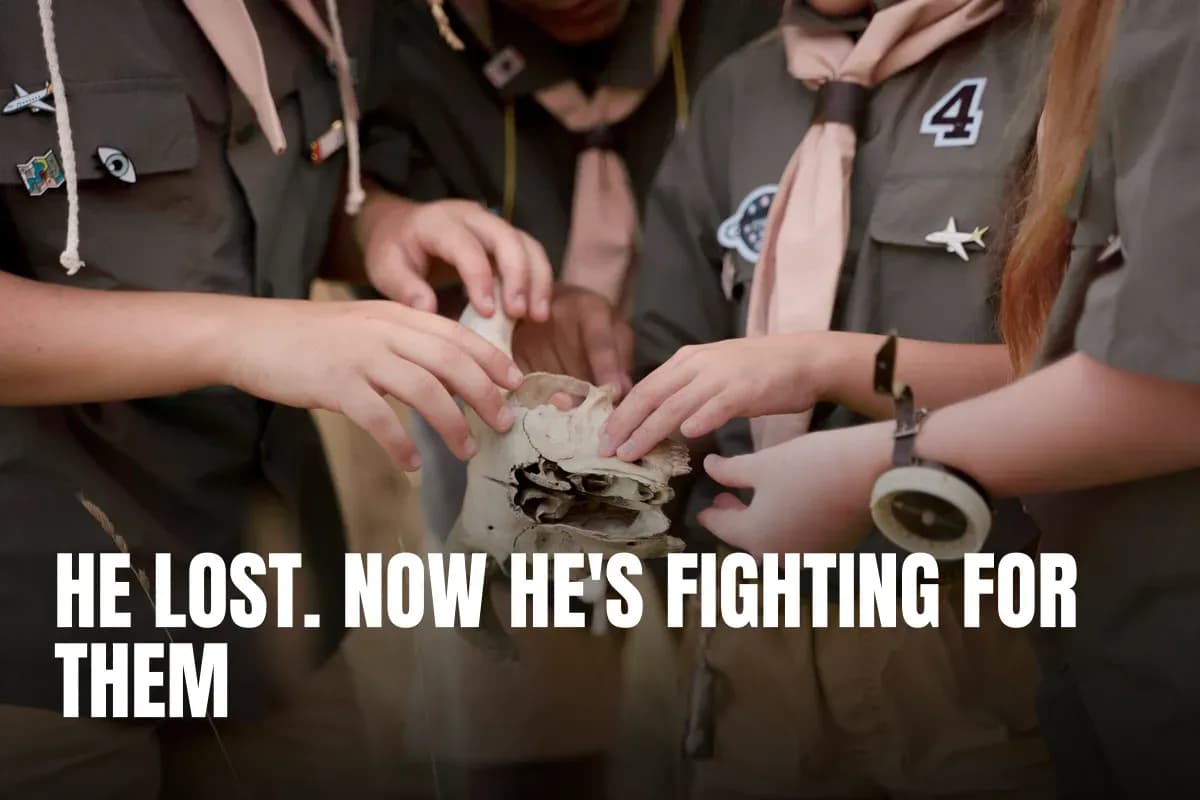
James Dale spent 25 years as the face of a Supreme Court ruling that let the Boy Scouts throw him out for being gay. Now he's using that same ruling to sue the Pentagon, arguing it protects Scouting America's LGBTQ-inclusive policies from government pressure.
A Second Lawsuit, A Deeper Question
Dale's first Freedom of Information Act lawsuit against the Pentagon, filed earlier this year, sought a single document: the memorandum outlining the Defense Department's agreement with Scouting America. It worked fast. Three weeks after filing, the Pentagon released the memo. But for Dale and his attorney, Isaac Park, a former Supreme Court clerk, the document raised more questions than it answered.
Hegseth had described a six-month deadline for Scouting America to fall in line. The memo, instead, laid out an open-ended enforcement structure with compliance reviews every 90 days. That gap, Dale and Park argue, leaves room for the Pentagon to keep pressuring the organization long after its February agreement was announced. The new lawsuit seeks records showing exactly how those reviews are being conducted, and whether they're being used to squeeze further changes out of Scouting America.
Park calls the underlying concern “jawboning,” the use of government influence to make a private organization act in ways officials couldn't order outright. “We saw in the weeks after the announcement of the memorandum changes being made to Scouting America's policies,” Park said. “Them saying one thing, the department saying a slightly different thing.”
The Irony at the Center of the Case
Dale's history with Scouting is why this case lands differently than a typical FOIA fight. In 1990, he was a 19-year-old Rutgers student and assistant scoutmaster for Troop 73 when the Boy Scouts expelled him after learning he was gay, calling him an “active sodomite.” He sued under New Jersey's public accommodations law and won at the state Supreme Court, only to have the U.S. Supreme Court reverse that ruling 5-4 in 2000, finding that forcing the Boy Scouts to keep him would violate the organization's First Amendment right of expressive association.
I find myself in this interesting, ironic place where I'm defending the decision that expelled me.
James Dale
That right of expressive association is a two-way street, and Dale now stands on the other side of it. If the doctrine let the Boy Scouts exclude a gay scoutmaster in 2000, he argues, it equally protects Scouting America's current decision to include LGBTQ members and leaders from being overridden by a federal agency wielding its budget and base access as leverage.
Why the Jamboree Matters
Scouting America's shift toward inclusion, ending bans on LGBTQ scouts and leaders and opening programs to girls, is what drew Hegseth's ire in the first place. He has never been a Scout, but he threatened to cut off the military's medical and logistical support for the National Jamboree, the roughly 20,000-person gathering held in West Virginia, and to bar troops from meeting on military installations if the organization didn't comply within six months.
Scouting America's leadership sent mixed signals in response. CEO Roger Krone told the Associated Press in February that transgender members would remain part of the program, even as Hegseth publicly insisted the organization would require members to go by “biological sex at birth and not gender identity.” Dale says the practical result showed up at this year's Jamboree, which concluded last week: dedicated spaces for girls, Scouts of color, and LGBTQ Scouts were removed from the flagship event. “We see spaces for girls being eradicated, spaces for kids of color, spaces for gay people, for trans kids,” he said. “It happened at the flagship event of scouting, the jamboree.”
MQ's Take
There's something genuinely satisfying about watching the same legal doctrine that once cost a gay man his place in an organization he loved get repurposed to defend that organization's right to welcome kids like him now. It's not poetic justice exactly, since Dale still thinks the 2000 ruling was wrong. But it is a useful reminder that free-association rights cut both directions, and that a private youth organization choosing inclusion has just as much constitutional standing as one choosing exclusion once did.
The real story here isn't really about Scouting America's internal politics. It's about a defense secretary using the Pentagon's checkbook and base access to lean on a private group's membership policies, and doing it in a way where the paper trail matters enormously. Dale's narrow, document-by-document legal strategy, first the memo, now the enforcement records, is exactly the kind of persistent, unglamorous accountability work that eventually forces institutions to explain themselves in public.
Dale fears the changes seen at the Jamboree could trickle down to local troop meetings and council events. If that's happening, families deserve to know it's the result of federal pressure, not organic policy choices by Scouting America itself.
Source: Washington Blade
Cover photo: cottonbro studio / Pexels