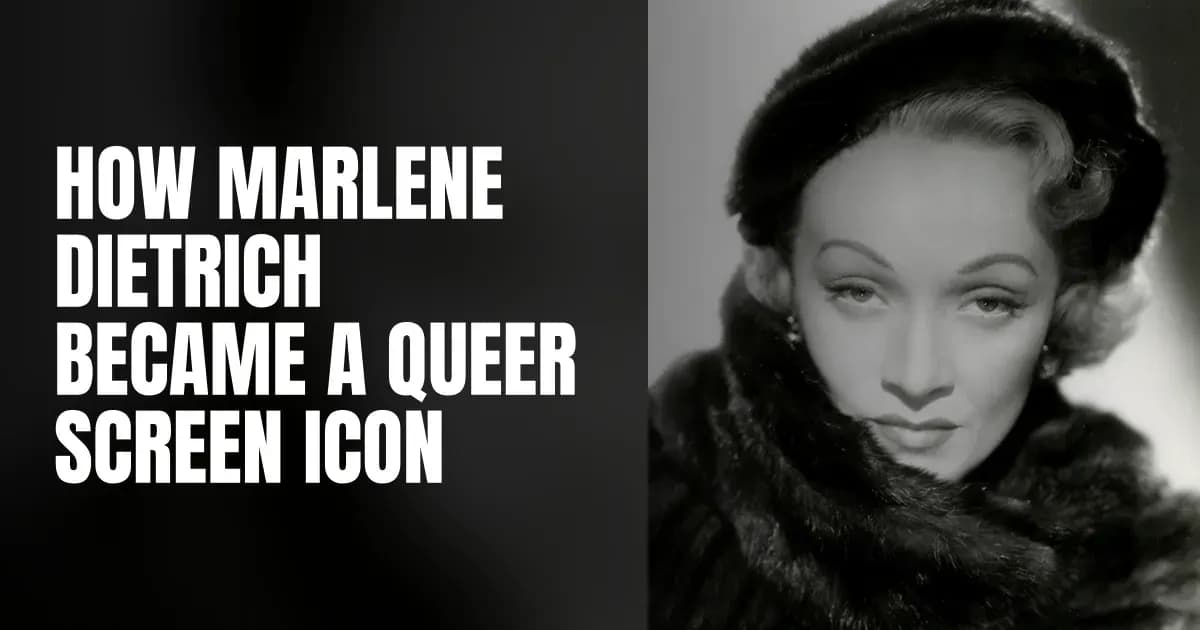
Marlene Dietrich arrived in Berlin at the turn of the 20th century and quickly became a fixture in the city's thriving cabaret and vaudeville scenes. By the 1920s, she was a known presence in Weimar Berlin's gay and drag bars, openly bisexual at a time when such openness was extraordinary. Her international breakthrough came in 1929 with The Blue Angel, a musical drama that caught the attention of director Josef von Sternberg and launched both of them toward Hollywood.
Morocco and sexual defiance on screen
Dietrich and von Sternberg's first American film together, Morocco, arrived in 1930 and would become one of the most influential works of her career. The film casts her as Amy Jolly, a jaded cabaret singer in Morocco during the Rif War, opposite Gary Cooper's American soldier Tom Brown. Though the plot follows a familiar romantic formula of two lovers separated by class and circumstance, the film stands out for its pre-Code visual language and dialogue that drip with eroticism and yearning. Dietrich's performance and the film's deliberate sensuality made her image inseparable from sexual defiance and freedom in the public imagination.
A queer legacy that endures
What made Dietrich and Morocco so significant for queer audiences was not subtlety but boldness. During an era when being openly gay or bisexual could be dangerous, Dietrich lived her sexuality visibly. Her roles on screen, especially in Morocco, reflected that refusal to hide or apologize. She was not coded or closeted; she was unapologetically herself. For LGBTQ+ audiences then and now, Dietrich represents a rare moment in Classic Hollywood when a major star's sexuality was neither a scandal to bury nor a secret to keep, but rather part of what made her a cultural force. Her legacy reminds us that queer people have always been present in cinema, even when mainstream audiences pretended not to see them.
Source: Queerty
Cover photo: Marlene_Dietrich_in_No_Highway_(1951).jpg: Twentieth Century Fox derivative work: TonyPolar (talk), Public domain, via Wikimedia Commons