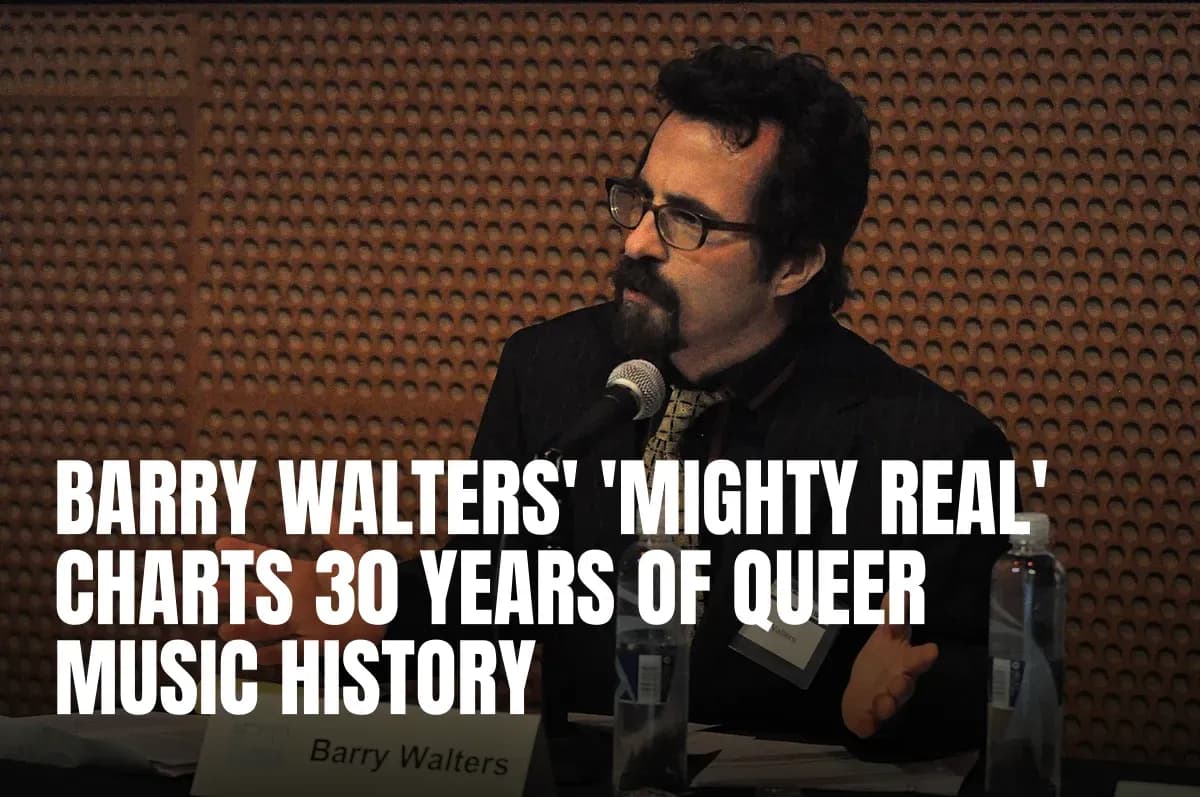
A sweeping new book traces how LGBTQ musicians and their allies shaped the soundtrack of modern culture, often speaking truths about sexuality and identity that mainstream audiences didn't initially recognize. "Mighty Real: A History of LGBTQ Music, 1969-2000" by Barry Walters examines three decades of songs, artists, and moments that became lifelines for queer listeners seeking mirrors of themselves in the music they loved.
Coding songs for a hidden audience
Walters argues that much of LGBTQ music history relies on a form of artistic subterfuge: carefully written lyrics that speak directly to gay listeners while remaining opaque to straight audiences. Lou Reed sang about trans people in the late 1960s and later penned what became an anthem for the Gay Liberation Front in 1972. Janis Joplin publicly claimed heterosexuality while privately maintaining relationships with women. Motown vocalists often embedded ambiguous language into hits that became standards.
This strategic ambiguity wasn't born of cowardice alone, Walters suggests, but of necessity in an era when open queerness could end careers. The book celebrates how artists turned constraint into creativity, crafting messages only their intended audience would fully understand.
An expansive and personal canon
"Mighty Real" encompasses everyone from David Bowie and Elton John to Donna Summer, Queen, the Village People, Cher, Whitney Houston, and Michael Jackson. Country music is notably sparse in Walters' selection, and his scope focuses on songs suited for clubs and parties rather than exploring every corner of queer musical expression. The author candidly frames the book as a preferential history rooted in his own memories and taste.
Standouts include Sylvester, whose impact moves Walters to tears decades later; Diana Ross's "I'm Coming Out," which cemented her place in queer culture; and Prince, whose all-female band members brought crucial lesbian influence to his sound. Walters also traces how John Lennon's hand placement on the back of the Beatles' "Sgt. Pepper's Lonely Hearts Club Band" became a moment of self-recognition for a young queer reader.
A book for browsing and debating
At nearly 500 pages, "Mighty Real" is substantial but accessible, with short chapters readers can finish in minutes. It's designed less as a definitive history and more as a conversation starter: Walters invites readers to agree, disagree, and build their own playlists from the era. That openness is part of its appeal, offering space for different listeners to find their own truths in the same songs.
Source: Washington Blade
Cover photo: Joe Mabel, CC BY-SA 3.0, via Wikimedia Commons