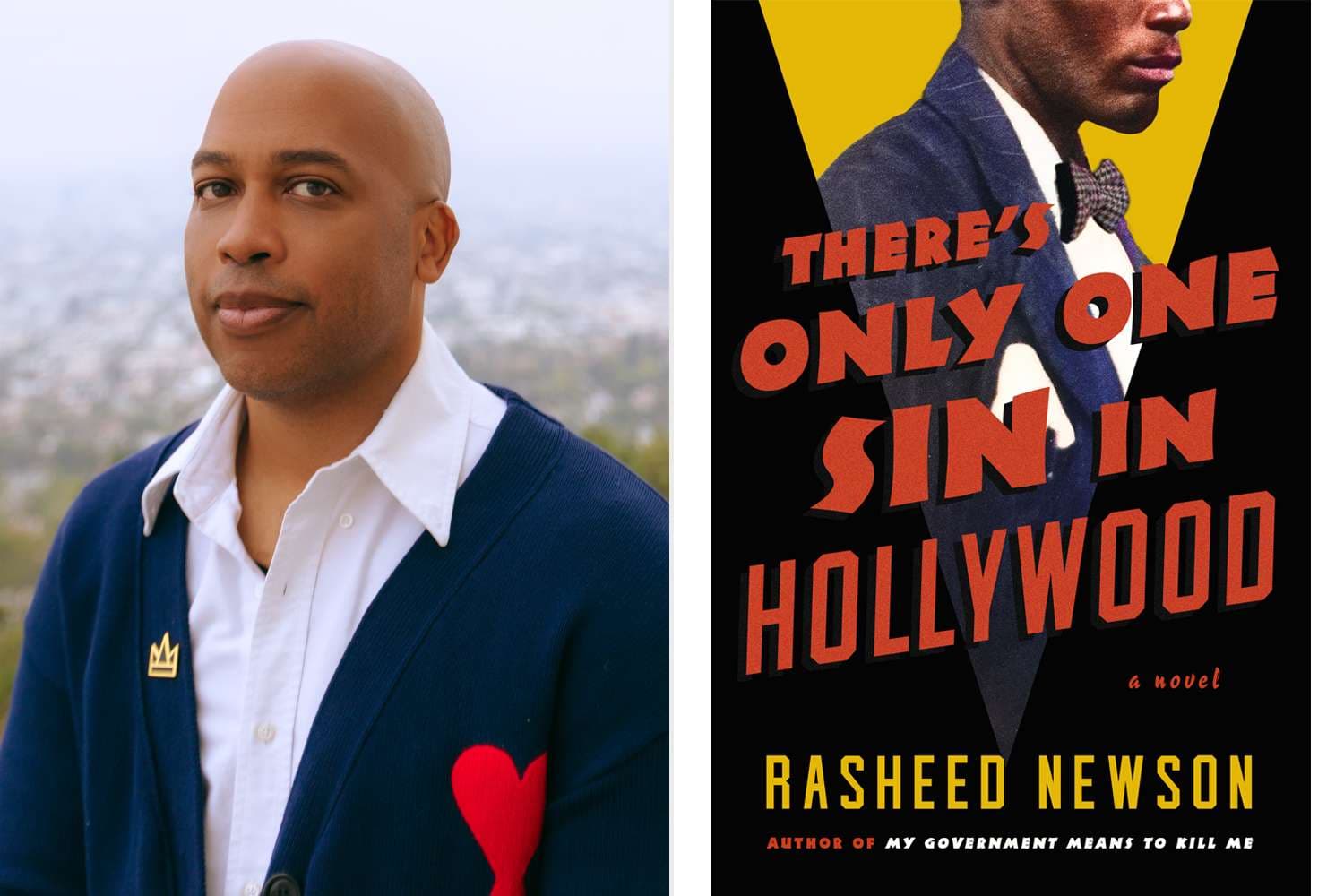
Rasheed Newson's debut novel There's Only One Sin in Hollywood, released today, offers a fictionalized window into the dangerous double lives of queer Black entertainers in 1950s Los Angeles, told through the eyes of a studio operative assigned to keep them hidden.
A story of collusion and intimacy
The novel follows Aaron Touissant, a Skyline Studios fixer whose job is to manage the closets of the studio's biggest stars—and keep them firmly shut. His primary charge is Xavier C. Barlow, a young Black actor groomed by the studio as a rival to Sidney Poitier. Through Aaron's perspective, readers witness the careful choreography of Xavier's public life: formal dates with women, elegant dinners, the performative heterosexuality required to survive in both Hollywood and 1950s America. But after hours, Aaron drives Xavier to Griffith Park and other cruising spots, navigating the hidden queer geography of Los Angeles.
Power, secrecy, and emotional survival
What emerges is a complex portrait of two men bound together by necessity and desire, yet kept apart by Aaron's determination to maintain professional distance. As Xavier tries to draw Aaron into deeper intimacy—asking about his wife, his past lovers—Aaron resists, aware that emotional closeness could cloud his judgment and compromise his ability to protect his charge. The novel captures the psychological toll of this compartmentalization: the loneliness of safeguarding others while guarding oneself, the constant calculation required to navigate a system designed to exploit and silence queer lives.
Reclaiming hidden history
Published by Flatiron Books, Newson's novel is framed as Aaron's belated reckoning—told after Xavier's death at the height of fame—with the powerful figures responsible for his tragedy. The work positions itself as both intimate character study and historical document, exploring how the entertainment industry weaponized secrecy against its queer employees and what survival looked like for Black queer men in mid-century America.
Source: Queerty