Ohio's Bureau of Motor Vehicles has abruptly stopped letting transgender residents update the gender marker on their driver's licenses and state IDs, requiring the marker to match a birth certificate or passport instead.
A form disappears overnight
For nearly two decades, Ohioans could change the gender marker on their license or ID simply by filing a form with the Bureau of Motor Vehicles. That process ended without warning, according to Equality Ohio and TransOhio, both of which told the Toledo Blade the shift happened with no public notice or transition period.
BMV spokesperson Lindsey Bohrer confirmed the change, saying the agency "will record the sex that is stated on an individual's birth certificate or passport as the sex that will be reflected on the Ohio driver license or ID card." Anyone hoping to update their license must now first get their birth certificate changed, a process handled county by county and requiring a probate court order in Ohio.
Changing a policy this consequential overnight, without warning or transparency, is not an accident. It is a choice.
Dwayne Steward, Equality Ohio
New legal definitions behind the shift
The policy traces to budget language Gov. Mike DeWine signed that redefines "sex" and "gender identity" in state law. The statute describes gender identity as "disconnected from biological reality" and says it "cannot be recognized as a replacement for sex," while defining sex strictly by chromosomes, hormones and genitalia present at birth. Ohio's broader Revised Code now declares the state "recognizes two sexes, male and female" and that they "are not changeable."
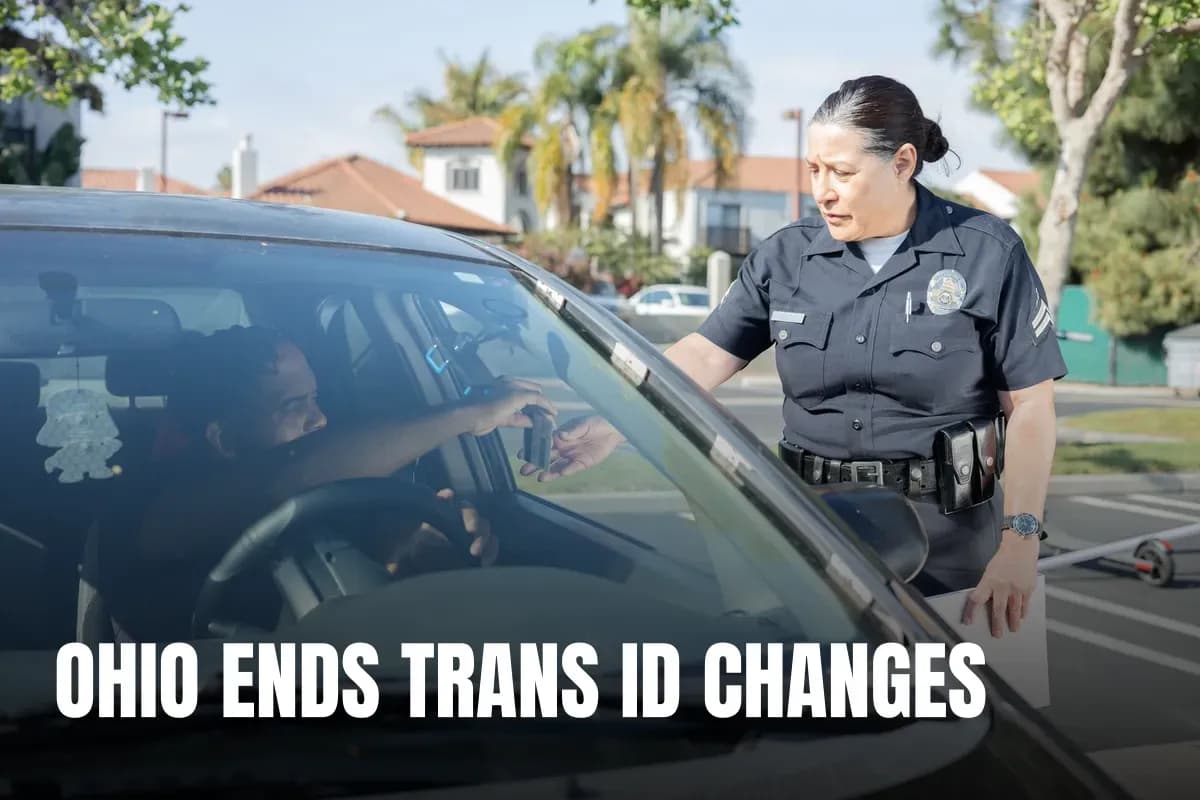
Dara Adkison of TransOhio called the resulting mismatch "intentional harm," noting that IDs which don't match a person's presentation can trigger scrutiny during traffic stops, healthcare visits or anything requiring proof of identity.
Part of a wider pattern
Ohio now joins Florida, Indiana, Kansas, Tennessee, Texas and Wyoming among states that block or sharply restrict gender marker changes on driver's licenses, with several of those states, plus Idaho, Iowa, Oklahoma and Montana, also barring changes to birth certificates. The Movement Advancement Project scores Ohio just 1.75 out of 49 on its overall LGBTQ+ policy tally, reflecting a wider set of restrictions including a school bathroom ban.
The moves follow a January 2025 executive order from President Trump directing federal agencies to recognize only male and female sex as fixed at birth, a policy advocates say emboldened states to write their own restrictions. Not every court has gone along: Montana's Supreme Court upheld a block on that state's ban in April 2026 while a class-action lawsuit proceeds, suggesting these policies may not survive legal scrutiny everywhere.
MQ's Take
An ID is supposed to answer a simple question: is this you? For trans people, mismatched documents turn that into a daily gamble, at the DMV counter, the airport line, the traffic stop. Ohio didn't debate this in public or give anyone time to adjust. It just switched the rules and let people find out the hard way. That's not administrative housekeeping; it's a policy designed to make ordinary life harder for a specific group, timed conspicuously close to an election.
What to Watch
Whether Ohio's change applies retroactively to IDs already updated under the old rules remains unclear, and legal challenges elsewhere suggest these bans aren't guaranteed to hold up. With more than 400 anti-LGBTQ+ bills reportedly pending in state legislatures nationwide, per the ACLU, Ohio's shift is unlikely to be the last.
Sources: PinkNews, LGBTQ Nation, Attitude, The Advocate
Cover photo: Kindel Media / Pexels