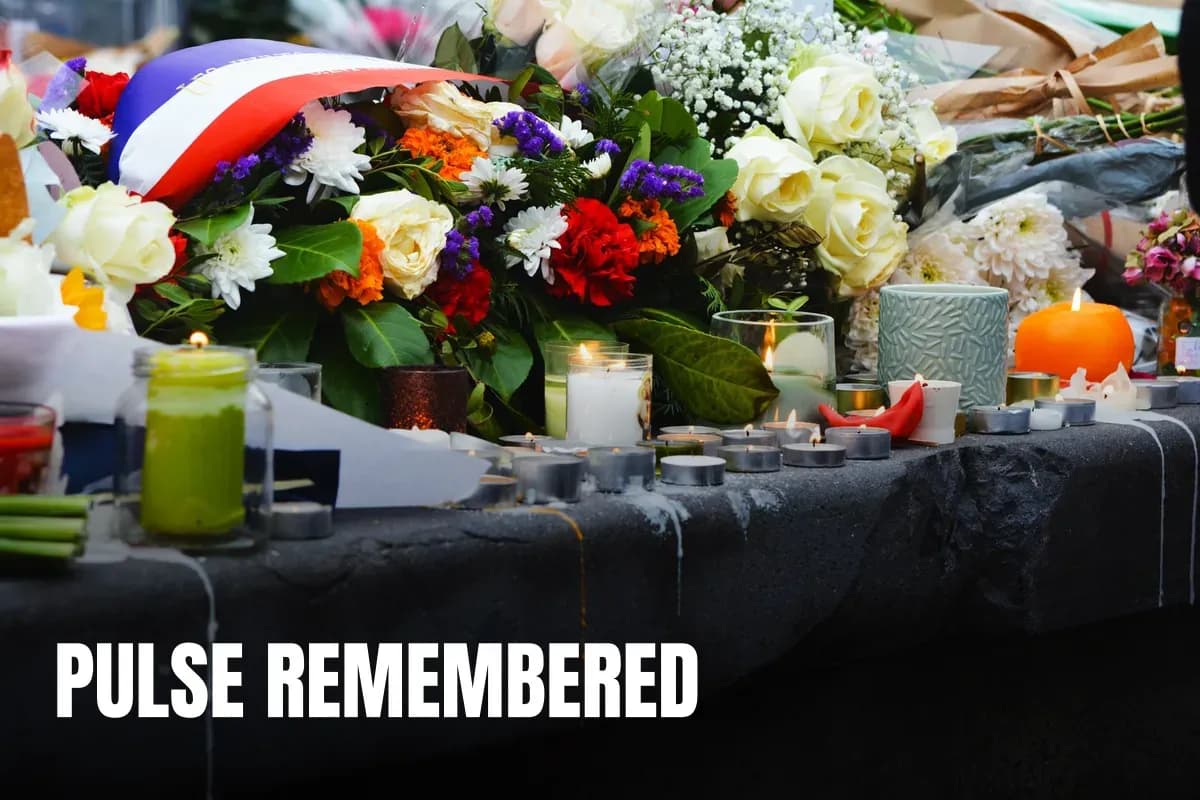
Friday marks a decade since a gunman opened fire at Pulse, a nightclub in Orlando, Florida, killing 49 people in what was at the time the deadliest mass shooting in modern U.S. history. The tragedy sent shockwaves through the LGBTQ community nationwide and internationally, prompting renewed calls for gun control and spurring long-term efforts to memorialize the victims.
On the ground in Orlando
Washington Blade Editor Kevin Naff and International News Editor Michael K. Lavers were among the journalists who traveled to Orlando in the immediate aftermath to cover the unfolding story. Rather than heading to the cordoned-off nightclub itself, Naff made his way to The Center, Orlando's LGBTQ community center downtown. What he found was not a locked-down facility but rather a hive of activity: staff and volunteers were fielding calls to secure visas and arrange free plane tickets for relatives of the victims. The Center had also organized a response to the city's urgent call for blood donations, with volunteers driving water to donation sites where lines stretched 1,500 people deep in 100-degree heat. For Naff, that scene embodied the strength and resilience of the LGBTQ community in the face of unimaginable loss.
Lavers arrived roughly 14 hours after the shooting and found a city in shock. He attended a press conference at The Center held by Equality Florida and other organizations, where executive director Terry DeCarlo and other leaders spoke to a devastated community. At the makeshift memorial that formed a block away from Pulse, Lavers spoke with residents who did not yet know if their friends had survived the attack. A heavy rainstorm began as he gathered those initial accounts, an apt mirror to the raw emotion of the day.
The push for accountability and memory
Beyond reporting the immediate tragedy, both journalists grappled with political responses that sometimes missed the mark. Naff recalled covering a vigil where then-Governor Rick Scott's motorcade appeared unannounced. Frustrated that Scott had not yet addressed the attack's anti-LGBTQ dimensions, Naff pushed to ensure the LGBTQ media had a voice in the questioning.
A decade of memorialization
In the years since, Orlando has taken concrete steps to honor the victims. The city purchased the Pulse property in 2023 for $2 million, and the building was demolished earlier this year. The city has committed $12 million toward a permanent memorial scheduled to open in 2027, ensuring that the tragedy and its lessons remain part of the community's ongoing story.
Source: Washington Blade
Cover photo: Noe Garde / Pexels