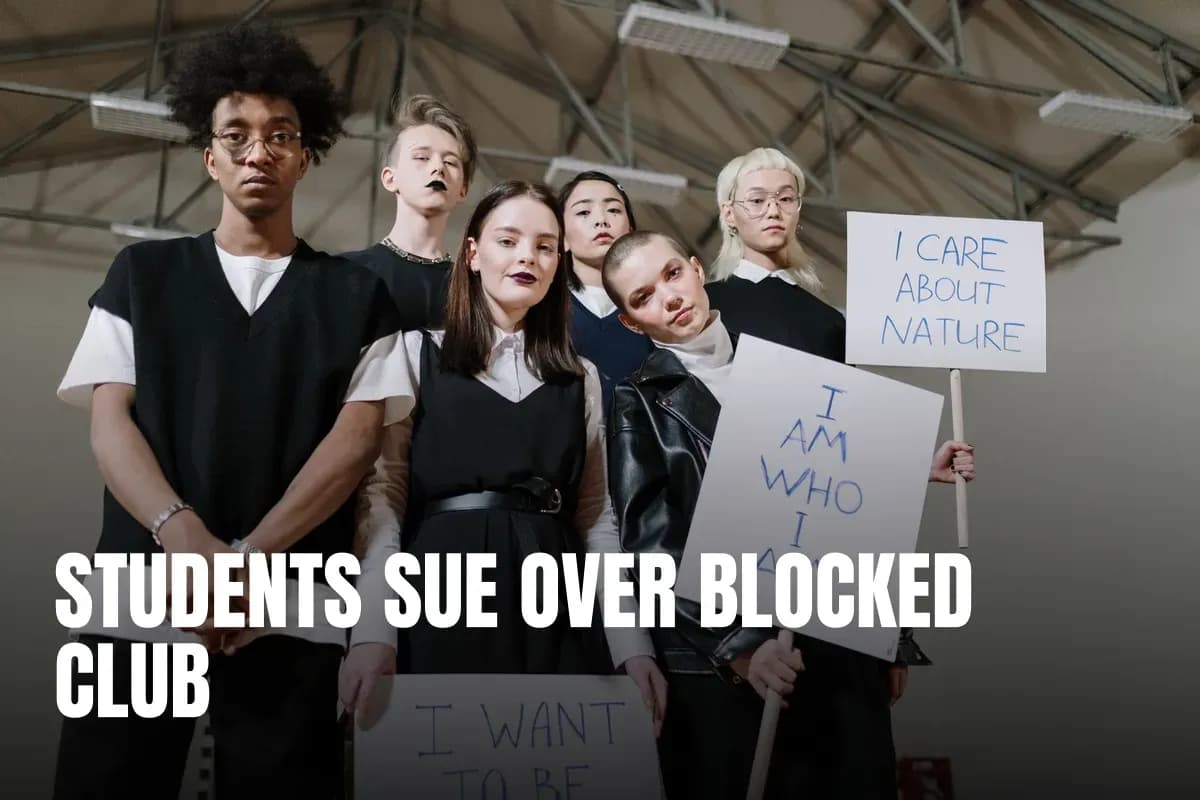
When a seventh grader in rural Virginia tried to start a gay-straight alliance at their middle school last year, administrators initially approved it. Then the backlash came-and so did a pattern of rule changes that made the club impossible to form. Now, the students and their families are taking the school district to federal court.
How a Club Became a Test Case
In August 2025, a student identified in the federal complaint as Z.J.W. began organizing the GSA at King George Middle School, about 50 miles southeast of Washington, D.C. A teacher agreed to sponsor it, and the school's principal, Casey Nice, expressed support. The students followed every rule: they drafted a constitution, created a calendar, designed a flyer, and gathered interest forms. The GSA's mission was straightforward: to provide "a safe, supportive, and inclusive environment for LGBTQ+ students and allies."
Nice approved the materials and posted them to the school's Canvas platform on September 15. Within days, 17 students had signed up.
But on September 18-just three days later-the club was pulled. The reason: it had "caused division in the community."
What happened in between tells the real story. Parents and community members had circulated the GSA materials on Facebook, and the response was swift and hostile. A group called "King George Uncensored" targeted the faculty sponsor, posting her photographs and email address online and accusing her of "grooming" children. A parent sent threatening emails to Superintendent Jesse Boyd, claiming school employees were engaged in illegal communication with minors about "illicit" subjects.
Moving the Goalposts
What followed, according to the lawsuit filed by the American Civil Liberties Union of Virginia and Potomac Law Group, was not a reassessment of policy but a deliberate effort to erase one organization while preserving others.
The school board first floated a requirement that middle school clubs need at least 10 interested students to exist. When lawyers warned this might violate the federal Equal Access Act-which requires schools that allow student clubs to treat them equally-the board took a different approach.
In November, officials adopted a new policy: noncurricular organizations would be limited to the high school only. On paper, this applied to every noncurricular club at the middle school. In practice, the Yearbook Club, Robotics Team, Book of the Month Club, Beta Club, Outdoor Club, and the superintendent's student advisory committee all continued operating.
King George County Schools cannot move the goalposts to prevent an organization that promotes respect and equality for LGBTQ+ students from existing just because school board members disagree with its message.
Julia Kahn, ACLU of Virginia staff attorney
To make this work, administrators reclassified existing organizations as curricular, even when they had no connection to any course. The Outdoor Club teaches students to make fishing lures and skin squirrels-neither tied to curriculum. The school even explored modifying a leadership class so the Fellowship of Christian Athletes could qualify as curricular and stay alive.
No such accommodation was offered to the GSA.
The Renaming Game
When the rule-changing didn't stop the students, school officials tried a different tactic: strip the identity from the club.
Principal Nice suggested calling it the "PRISM Club," a name that could promote tolerance without explicitly naming LGBTQ+ students. The superintendent reportedly said even that was too controversial. He countered with "Kindness Club" or "Safe Space Group."
The students refused. They didn't want a generic club that happened to welcome them. They wanted a space that explicitly recognized them and their experiences.
A Hostile School Culture Made Concrete
The lawsuit reveals a school environment that was already unsafe for LGBTQ+ youth-and where officials knew it. One student, identified as A.A.P., told the school board he heard "a lot of slurs per day" and witnessed a friend being punched in a school bathroom. When he attended board meetings to advocate for the GSA, another student's anti-LGBTQ+ comments during public comment left him crying.
They just want a club like any other club. By allowing other organizations while blocking the GSA, officials are sending the message that there's something wrong with being in that community.
Susan Park, parent
For LGBTQ+ students in already hostile environments, a club offers more than friendship-it's survival. It's a place to find people who understand, to talk about issues affecting them, and to feel less alone. By denying the GSA while maintaining other clubs, the school board didn't just enforce a rule. It told LGBTQ+ students their needs didn't matter.
Why It Matters Now
The lawsuit transforms a local dispute into a federal civil rights fight, bringing federal law front and center. The Equal Access Act requires that if a school allows noncurricular clubs, it must do so on equal terms regardless of the club's message. The First Amendment protects students' right to associate and speak. When a school board changes rules specifically to block one group while letting others flourish, it crosses a line.
The school board's actions here are particularly striking because they reveal intent. The reclassification of other clubs as curricular, the rule changes that came after the GSA was approved, the attempts to rename the club into something unrecognizable-these aren't neutral policy shifts. They're evidence that the real problem wasn't the club's structure or the rules. It was the club's identity.
Mary Rohmiller, a partner at Potomac Law Group, put it plainly: "The students at the heart of this case are not asking for special treatment. They're asking for equal treatment."
Federal court will now decide whether King George County Schools gets to keep moving the goalposts or whether students have a right to organize, visibly and proudly, without their school conspiring to make them disappear.
Sources: them., The Advocate
Cover photo: cottonbro studio / Pexels